Dear Sen. Sessions,
Let me start by introducing myself. I am Dr. David Bearman, I am considered to be one of the most clinically knowledgable physicians in the field of medical cannabis in the United States. I have spent 40 years working in substance and drug abuse treatment and prevention programs. I was a pioneer in the free and community clinics that are now available to Americans everywhere. I was even a member of then-California Governor Ronald Reagan’s Interagency Task Force on Drug Abuse. I urge you, if confirmed, to take medical cannabis seriously and not only allow state programs to continue to flourish but urge the President, the DEA, Congress and FDA to work on seriously reconsidering America’s current drug laws and policies.
This, unlike almost everything else, is not a partisan issue. There are many Republicans, like Dana Rohrabacher (California), who believe that Mr. Trump understands the medicinal use of cannabis. Dr. Ron Paul (Texas) has supported the state rights’ view that regulating medicine is a power of the state. His son, Senator Rand Paul (Kentucky), also a physician, also recognizes that the 1925 SCOTUS decision Linder v the United States and the 9th and 10th Amendments to the Constitution that give states, not the federal government, the right to regulate the practice of medicine.
I am guessing you may be unaware that over 150 medical organizations including the American Medical Association (AMA), American Nurses Association (ANA), (American Public Health Association (AAPHA) and American College of Physicians, endorse the medical use of cannabis.
Senator Sessions, you are a lucky man if none of your family and friends suffer from multiple sclerosis, Parkinson’s Disease, Alzheimer’s Disease, ulcerative colitis, Crohn’s Disease, seizures, migraine headaches, ADD/ADHD, PTSD, autism spectrum disorder or cancer. These are all medical conditions that thousands of years of history, tens of thousands of research studies and modern experience with millions of patients are proven to be relieved with botanical cannabis.
The federal government approved a phase III clinical trial with tincture of cannabis (Nabixamol and Epidiolex). Nabixamol is legal to prescribe in 24 countries. If you have taken the time to read the literature then you must know that cannabis is safe. In 1937 the AMA, testifying AGAINST the Marijuana Tax Act, told the House Ways and Means Committee that the AMA knew of no dangers from the medicinal use of cannabis. In 1988 after a two year rescheduling hearing, the DEA’s Chief Administrative Law Judge, the late Francis Young, recommended rescheduling cannabis. In his Finding of Fact, he found that cannabis was “one of the safest therapeutic agents known to man.”
One of the most exciting potential therapeutic benefits is the well documented (in basic science studies) anti-cancer potential of cannabinoids. Dr. Donald Abrams, oncologist and professor at UCSF School of Medicine, has said there is more than enough basic scientific evidence and anecdotal reports to justify doing human clinical trials to determine if cannabis can actually cure cancer. Currently, human trials are ongoing in the United Kingdom and Israel on the use of cannabis to cure glioblastoma multiforme. This is based on research done in Spain by Manuel Guzman and in Italy by Vincenzo Di Marzo, PhD and Israel by Raphael Mechoulam, Ph.D.
I have no doubt you have good intentions, Senator Sessions, however a more aggressive stance by the federal government in utilizing the 1942 Supreme Court decision Wickert v. Filburn to stretch the commerce clause of the Constitution beyond all recognition will not only threaten states rights, but quite likely will interfere with treatment of many who have been receiving palliation, therapeutic and possibly life extending benefit from the medicinal use of cannabis.
Senator Sessions, you owes it to the ill of the United States who benefit from cannabis to educate yourself on the long history and substantial research on the medicinal value of cannabis. You can do it in private by viewing any of the following videos: “Medicinal Cannabis and It’s Impact on Your Health,” “What If Cannabis Cured Cancer” and the CNN Sanjay Gupta, MD documentary. If after learning more you would like to educate the staff of the AG’s office in DC regarding cannabis, cannabinoids and the endocannabinoid system, I would be happy to arrange such a presentation, through physician members of the American Academy of Cannabinoid Medicine.
This medicinal use of cannabis is serious science and medicine. I am confident that an open minded review of the science will inform you that the government needs to do more to promote scientific research in the medicinal use of cannabis and to do less to interfere with the treatment of the ill.
Source
Wednesday, February 8, 2017

Last chance to stop Sessions
From The Drug Policy Alliance:
As soon as tomorrow, the U.S. Senate will cast a final vote on the nomination of drug war extremist Jeff Sessions for Attorney General.
Email your Senators right away urging them to oppose his nomination.
Then, follow-up with a quick phone call to your Senators at 877-959-6082. Tell the person your name, where you live and say:
I am calling to urge my Senator to reject Jeff Sessions for Attorney General. He is unfit to head the Justice Department and will likely escalate the failed war on drugs and undermine state marijuana laws. Please oppose his nomination and the giant step backwards for criminal justice that he represents. Thank you.
Jeff Sessions would be a nightmare as Attorney General and is a threat to the historic progress you’ve helped us achieve.
He has an appalling record on drug policy, civil and human rights, and criminal justice reform.
Advocates like you have been flooding the Senate with thousands of emails and calls. The response has been overwhelming.
But now it’s our last chance to keep the pressure up before the Senate casts a final vote this week.
Make your voice heard: stand against Sessions for Attorney General.
To sign the petition
As soon as tomorrow, the U.S. Senate will cast a final vote on the nomination of drug war extremist Jeff Sessions for Attorney General.
Email your Senators right away urging them to oppose his nomination.
Then, follow-up with a quick phone call to your Senators at 877-959-6082. Tell the person your name, where you live and say:
I am calling to urge my Senator to reject Jeff Sessions for Attorney General. He is unfit to head the Justice Department and will likely escalate the failed war on drugs and undermine state marijuana laws. Please oppose his nomination and the giant step backwards for criminal justice that he represents. Thank you.
Jeff Sessions would be a nightmare as Attorney General and is a threat to the historic progress you’ve helped us achieve.
He has an appalling record on drug policy, civil and human rights, and criminal justice reform.
Advocates like you have been flooding the Senate with thousands of emails and calls. The response has been overwhelming.
But now it’s our last chance to keep the pressure up before the Senate casts a final vote this week.
Make your voice heard: stand against Sessions for Attorney General.
To sign the petition
Net neutrality is not partisan so protect it right away
From Fight For The Future:
The Internet is awesome. It lets us access more information than ever before, find alternatives to mainstream news, keep in touch with our friends, find new music and videos, and more.
Why is it so awesome? Because unlike television and print, what you see and do online is up to *you*—not some corporation or bureaucrat.
But politicians and lobbyists from the cable companies keep trying to mess with that fundamental structure. They want to allow the government and corporate monopolies to slow down or censor certain websites in order to squeeze us for more money, or because they don’t like their politics.
One of the biggest problems is that politicians in Washington, DC have decided to turn the Internet into a political football. They’ve made net neutrality a partisan issue, which is silly because it’s not -- it’s a basic technological principle that has made the Internet what it is today. Now the former lobbyist for Big Cable who's been put in charge of internet regulation, Ajit Pai, says he’s planning to “take a weed whacker” to the basic principle upholding the open web.
We need to show Congress and the FCC that people from all across the political spectrum love the Internet and don’t want politicians to screw it up by getting rid of net neutrality. Sign the petition, and check one of the boxes to show decision makers that people want the Internet to stay awesome, regardless of their political ideology.
When you sign the petition, back it up by indicating where you fall on the political map, and share with everyone you know who feels the same!
The Internet is awesome. It lets us access more information than ever before, find alternatives to mainstream news, keep in touch with our friends, find new music and videos, and more.
Why is it so awesome? Because unlike television and print, what you see and do online is up to *you*—not some corporation or bureaucrat.
But politicians and lobbyists from the cable companies keep trying to mess with that fundamental structure. They want to allow the government and corporate monopolies to slow down or censor certain websites in order to squeeze us for more money, or because they don’t like their politics.
One of the biggest problems is that politicians in Washington, DC have decided to turn the Internet into a political football. They’ve made net neutrality a partisan issue, which is silly because it’s not -- it’s a basic technological principle that has made the Internet what it is today. Now the former lobbyist for Big Cable who's been put in charge of internet regulation, Ajit Pai, says he’s planning to “take a weed whacker” to the basic principle upholding the open web.
We need to show Congress and the FCC that people from all across the political spectrum love the Internet and don’t want politicians to screw it up by getting rid of net neutrality. Sign the petition, and check one of the boxes to show decision makers that people want the Internet to stay awesome, regardless of their political ideology.
When you sign the petition, back it up by indicating where you fall on the political map, and share with everyone you know who feels the same!
Sunday, February 5, 2017
Washington State wants to outlaw bitcoin for marijuana industry
A new bill filed in the Washington State Senate is seeking to prohibit local marijuana businesses from using bitcoin.
Sponsored by Senators Steve Conway and Ann Rivers, SB 5264 seeks to amend some of the state’s rules governing the sale and distribution of marijuana products. The move comes more than four years after Washington voters passed a ballot measure legalizing marijuana in November 2012.
Under the proposed rule, businesses that work in the local marijuana industry would not be allowed to either pay for goods with digital currency or accept those kinds of payments from customers. The bill also includes a definition of "virtual currency" that explicitly targets "digital representation[s] of value used as a medium of exchange, a unit of account, or a store of value", but excludes the "the software or protocols governing the transfer".
Digital currency offers a unique opportunity for the legal cannabis industry to grow at its current rate and prepare for Federal legalization. Payments with credit card and digital currency are highly trackable, cash is not. If it is the state's wish to not be able to track cannabis payments, incentivize money laundering and keep the industry a step behind, then this bill would do just that.
Forcing the industry into cash is not only a bad idea, but creates significant risk for community and surrounding businesses. Being a high volume cash business with no banking options creates significant strain within the industry and creates a target for would-be criminals.
Furthermore, collection of taxes is difficult and time consuming when using cash. Digital currency poses a unique opportunity to track the cannabis industries payments leaving a fully auditable trail.
It's time we move into the future and tell Senator Conway and Rivers to not limit innovation, but to protect it. Allow cannabis businesses to use digital currency, move into the future and keep our communities safe.
To sign the petition
Sponsored by Senators Steve Conway and Ann Rivers, SB 5264 seeks to amend some of the state’s rules governing the sale and distribution of marijuana products. The move comes more than four years after Washington voters passed a ballot measure legalizing marijuana in November 2012.
Under the proposed rule, businesses that work in the local marijuana industry would not be allowed to either pay for goods with digital currency or accept those kinds of payments from customers. The bill also includes a definition of "virtual currency" that explicitly targets "digital representation[s] of value used as a medium of exchange, a unit of account, or a store of value", but excludes the "the software or protocols governing the transfer".
Digital currency offers a unique opportunity for the legal cannabis industry to grow at its current rate and prepare for Federal legalization. Payments with credit card and digital currency are highly trackable, cash is not. If it is the state's wish to not be able to track cannabis payments, incentivize money laundering and keep the industry a step behind, then this bill would do just that.
Forcing the industry into cash is not only a bad idea, but creates significant risk for community and surrounding businesses. Being a high volume cash business with no banking options creates significant strain within the industry and creates a target for would-be criminals.
Furthermore, collection of taxes is difficult and time consuming when using cash. Digital currency poses a unique opportunity to track the cannabis industries payments leaving a fully auditable trail.
It's time we move into the future and tell Senator Conway and Rivers to not limit innovation, but to protect it. Allow cannabis businesses to use digital currency, move into the future and keep our communities safe.
To sign the petition
Saturday, February 4, 2017
Voters demanded pot policy changes, it’s time for lawmakers to listen
Voters in eight states decided on Election Day to radically amend their longstanding marijuana policies.
In four states – California, Maine, Massachusetts, and Nevada – voters approved initiatives to regulate the production, use, and retail sale of cannabis to adults. In an additional four states – Arkansas, Florida, Montana, and North Dakota – voters decided in favor of ballot measures to permit the dispensing and use of marijuana for therapeutic purposes.
In each of these jurisdictions, proponents of marijuana policy reform were forced to bring the issue directly to the voters because elected officials steadfastly refused to address it legislatively. In the weeks following the election, little has changed.
Despite these voter mandates, many lawmakers remain reluctant to move forward with the legal reforms that the public has demanded. In some cases, legislators and regulators are outright defying voters’ will by proposing measures to undermine the election’s outcomes altogether.
In Arkansas, where 53 percent of voters approved a constitutional amendment — the Arkansas Medical Marijuana Act — state lawmakers immediately passed emergency implementation to delay the law’s enactment, while additional legislation remains pending to prevent the law’s implementation altogether. Separate legislative efforts are also pending to significantly rewrite the law in a manner that is far more restrictive than what voters intended.
A similar scenario is emerging in Florida, where 71 percent of voters endorsed a constitutional amendment providing doctors with the discretion to recommend medical marijuana to patients for whom they believed the benefits “would likely outweigh the potential health risks.” In recent weeks, however, lawmakers and regulators have proposed rules that seek to gut many of the law’s key provisions.
Specifically, newly released regulations seek to: halt the state from licensing would-be medical marijuana providers, forbid doctors from authorizing cannabis for chronic pain patients, and to restrict qualifying patients from obtaining whole-plant cannabis (instead limiting patients’ use to marijuana-infused products only).
Things are little different in North Dakota. Despite the fact that 64 percent of voters passed the Compassionate Care Act in November, leadership in the House and Senate is moving full speed ahead to suspend the law’s enactment.
Voter-initiated plans to regulate the retail production and sale of marijuana to adults have fared little better.
In Massachusetts, a handful of political leaders pushed through emergency legislation during an informal legislative session to delay marijuana sales until July 1, 2018.
The Boston Globe summarized the event this way, “The extraordinary move, made in informal sessions with just a half-dozen legislators present, … unravel[s] a significant part of the legalization measure passed by 1.8 million voters.” Additional measures before lawmakers seek to further undue several other aspects of the law, including adults’ ability to grow marijuana in their private residence.
In Maine, lawmakers have similarly rushed legislation through both chambers to delay the enactment of voter-initiated provisions governing the retail production and sale of marijuana until the spring of 2018. The emergency measure also rolls back specific initiative provisions that permitted on site consumption in specially licensed establishments, as well as the possession of marijuana-infused edible products.
Lawmakers’ decision to disregard the will of their constituents is both arrogant and troubling. Whether or not one supports marijuana law reform, one should find legislators’ attitudes and actions an affront to the democratic process. Americans have been told time and time again that ‘elections have consequences.’ There should not be a ‘marijuana exception’ to this longstanding principle.
Voters made their opinions on marijuana policy clear at the ballot box in November. Lawmakers in these jurisdictions have a responsibility to abide by the will of the people and to do so in a timely manner. Americans have lived with the failings of marijuana prohibition for far too long.
The people’s will should not be compromised, second-guessed, or held hostage by politicians who are unwilling to recognize that they are on the wrong side of history.
Source
That's a good idea. Perhaps our lawmakers need to hear what We The People have to say. You can contact your Congressional Representative and your Senators and bring this to their attention. Give them the link to the source of this article so that they know we mean business.The more of us they hear from the better so let's do it to it.
In four states – California, Maine, Massachusetts, and Nevada – voters approved initiatives to regulate the production, use, and retail sale of cannabis to adults. In an additional four states – Arkansas, Florida, Montana, and North Dakota – voters decided in favor of ballot measures to permit the dispensing and use of marijuana for therapeutic purposes.
In each of these jurisdictions, proponents of marijuana policy reform were forced to bring the issue directly to the voters because elected officials steadfastly refused to address it legislatively. In the weeks following the election, little has changed.
Despite these voter mandates, many lawmakers remain reluctant to move forward with the legal reforms that the public has demanded. In some cases, legislators and regulators are outright defying voters’ will by proposing measures to undermine the election’s outcomes altogether.
In Arkansas, where 53 percent of voters approved a constitutional amendment — the Arkansas Medical Marijuana Act — state lawmakers immediately passed emergency implementation to delay the law’s enactment, while additional legislation remains pending to prevent the law’s implementation altogether. Separate legislative efforts are also pending to significantly rewrite the law in a manner that is far more restrictive than what voters intended.
A similar scenario is emerging in Florida, where 71 percent of voters endorsed a constitutional amendment providing doctors with the discretion to recommend medical marijuana to patients for whom they believed the benefits “would likely outweigh the potential health risks.” In recent weeks, however, lawmakers and regulators have proposed rules that seek to gut many of the law’s key provisions.
Specifically, newly released regulations seek to: halt the state from licensing would-be medical marijuana providers, forbid doctors from authorizing cannabis for chronic pain patients, and to restrict qualifying patients from obtaining whole-plant cannabis (instead limiting patients’ use to marijuana-infused products only).
Things are little different in North Dakota. Despite the fact that 64 percent of voters passed the Compassionate Care Act in November, leadership in the House and Senate is moving full speed ahead to suspend the law’s enactment.
Voter-initiated plans to regulate the retail production and sale of marijuana to adults have fared little better.
In Massachusetts, a handful of political leaders pushed through emergency legislation during an informal legislative session to delay marijuana sales until July 1, 2018.
The Boston Globe summarized the event this way, “The extraordinary move, made in informal sessions with just a half-dozen legislators present, … unravel[s] a significant part of the legalization measure passed by 1.8 million voters.” Additional measures before lawmakers seek to further undue several other aspects of the law, including adults’ ability to grow marijuana in their private residence.
In Maine, lawmakers have similarly rushed legislation through both chambers to delay the enactment of voter-initiated provisions governing the retail production and sale of marijuana until the spring of 2018. The emergency measure also rolls back specific initiative provisions that permitted on site consumption in specially licensed establishments, as well as the possession of marijuana-infused edible products.
Lawmakers’ decision to disregard the will of their constituents is both arrogant and troubling. Whether or not one supports marijuana law reform, one should find legislators’ attitudes and actions an affront to the democratic process. Americans have been told time and time again that ‘elections have consequences.’ There should not be a ‘marijuana exception’ to this longstanding principle.
Voters made their opinions on marijuana policy clear at the ballot box in November. Lawmakers in these jurisdictions have a responsibility to abide by the will of the people and to do so in a timely manner. Americans have lived with the failings of marijuana prohibition for far too long.
The people’s will should not be compromised, second-guessed, or held hostage by politicians who are unwilling to recognize that they are on the wrong side of history.
Source
That's a good idea. Perhaps our lawmakers need to hear what We The People have to say. You can contact your Congressional Representative and your Senators and bring this to their attention. Give them the link to the source of this article so that they know we mean business.The more of us they hear from the better so let's do it to it.
Give terminally ill patients a chance at hope and survival
From Freedom Works:
Right now there are millions of Americans lying in hospital beds. They’ve suffered for years combating a fatal illness, or were recently diagnosed. And under current federal law, they can't try experimental life-saving treatments. THIS IS WRONG!
Thankfully Senator Ron Johnson has introduced the Trickett Wendler Right to Try Act (S. 204). This is a bill that allows terminally ill patients to try potentially lifesaving, experimental treatments.
But more importantly, this bill offers hope to those who need it most. Please contact your senators right now. Tell them to support S. 204 today.
This bill literally gives dying patients a shot at survival. It goes beyond politics, it’s the moral thing to do. That’s why I’m begging you to contact your senators right now. Tell them to give these terminally ill patients hope. Tell them to support S. 204 right now.
Right now there are millions of Americans lying in hospital beds. They’ve suffered for years combating a fatal illness, or were recently diagnosed. And under current federal law, they can't try experimental life-saving treatments. THIS IS WRONG!
Thankfully Senator Ron Johnson has introduced the Trickett Wendler Right to Try Act (S. 204). This is a bill that allows terminally ill patients to try potentially lifesaving, experimental treatments.
But more importantly, this bill offers hope to those who need it most. Please contact your senators right now. Tell them to support S. 204 today.
This bill literally gives dying patients a shot at survival. It goes beyond politics, it’s the moral thing to do. That’s why I’m begging you to contact your senators right now. Tell them to give these terminally ill patients hope. Tell them to support S. 204 right now.
Wednesday, February 1, 2017
Which way will he go?
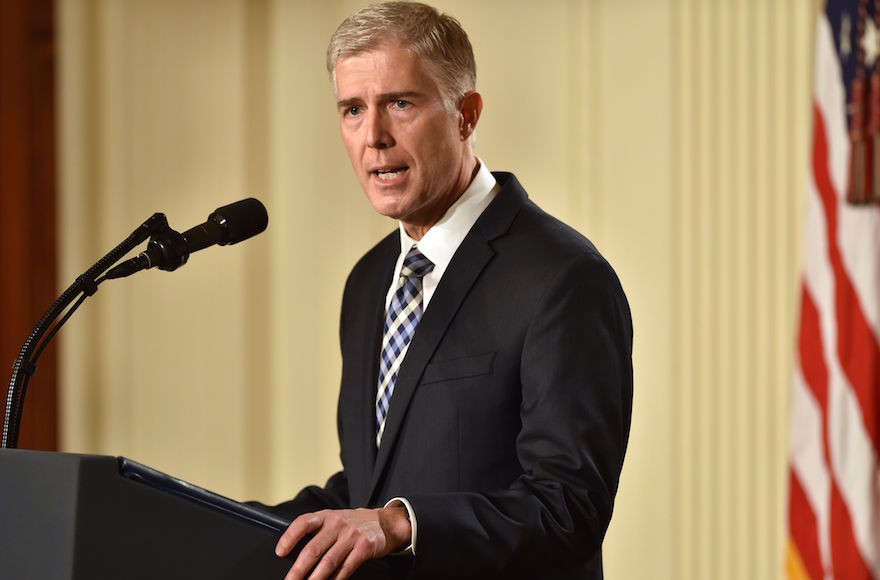
Judge Neil Gorsuch, President Donald Trump’s nominee for the Supreme Court, hails from Colorado, and if he is ultimately confirmed by the Senate, he could end up having a significant role in deciding whether marijuana will remain legal in his state and others.
Gorsuch currently serves on the 10th Circuit Court of Appeals in Denver, and he has ruled on at least three weed-related cases in recent years. Legal experts and marijuana industry attorneys say it’s hard to say how Gorsuch might rule when the high court takes its next pot case, and it might be impossible to know for sure unless he’s quizzed about it during his confirmation hearings. In the meantime, however, his track record offers some clues.
While Gorsuch is a conservative who falls somewhere between Antonin Scalia and Clarence Thomas on the spectrum of Supreme Court ideology, Alex Kreit, director of the Center for Law & Social Justice at the Thomas Jefferson School of Law, said there aren’t any red flags in his past that indicate he would be categorically opposed legal weed.
“There isn’t anything in his record that suggests he is a hardline anti-marijuana, pro-mandatory minimum zealot in the mold of Jeff Sessions — at least not that I’ve seen,” Kreit said. “And there are at least some cases that suggest he’s willing to rule in favor of individual rights and against the government in some criminal justice cases.”
Gorsuch’s most notable marijuana decision came in December 2015 on a case that dealt with a tax dispute between a Colorado dispensary and the IRS. The dispensary owners wanted to use the Fifth Amendment’s protection against self-incrimination to keep the nature of their business secret, which would have allowed them to significantly reduce their tax bill. Gorsuch joined the three-judge panel’s ruling against them, but his opinion included language that suggested he might be sympathetic to their situation.
He cited the “mixed messages the federal government is sending these days about the distribution of marijuana,” such as a 2013 memo from the Department of Justice that says federal authorities should not prosecute individuals who abide by state marijuana laws, even though weed remains illegal federally.
“So it is that today prosecutors will almost always overlook federal marijuana distribution crimes in Colorado but the tax man never will,” Gorsuch wrote, adding that, “the government simultaneously urged the court to take seriously its claim that the petitioners are violating federal criminal law and to discount the possibility that it would enforce federal criminal law.”
James Thorburn, the attorney for the dispensary owners, said that even though Gorsuch’s ruling was unfavorable to his clients, the judge was fair and thorough. He noted that Gorsuch has “an impeccable reputation,” and said he “asks the difficult questions, but he does it in such a way that it is very conducive to being able to argue a case effectively.”
“I think that he would be open to a favorable ruling to the marijuana industry,” Thorburn said. “That doesn’t say he would actually rule in favor of the industry, but I think the door is not closed.”
Gorsuch was also involved in a 2010 case where the 10th Circuit ruled that a couple accused of selling marijuana couldn’t use the Religious Freedom Restoration Act to defend themselves because their “marijuana dealings were motivated by commercial or secular motives rather than sincere religious conviction.”
In 2013, Gorsuch wrote the majority opinion in a case where the court ruled that it was “reasonable” for a police officer to use a taser on a suspect who fled in order to avoid being arrested for illegally growing marijuana. The suspect died from a heart condition, and his parents sued, claiming that the cop used excessive force. Gorsuch noted that “illegal processing and manufacturing of marijuana may not be inherently violent crimes but, outside the medical marijuana context, they were felonies under Colorado law at the time.”
Hilary Bricken, an attorney with the Seattle-based Canna Law Group, seconded Thornburn’s assessment, saying Gorsuch seems to be “a reasonable judge” who listens closely to the lawyers who appear in his courtroom. “I wouldn’t say he’s mainstream,” she said, “but he’s somebody you can argue with.”
Referring to the tax case, Bricken said Gorsuch appears to think that marijuana policies ought to be determined by the letter of the law, not the whims of the president or the attorney general.
“He doesn’t like federal overreach, especially executive overreach,” Bricken said. “Reading between the lines, he’s saying we’re not going to change this, it’s going to have to come through Congress.”
The big question, then, is whether Gorsuch would side with states or the federal government in a dispute over legal weed. The Supreme Court has already affirmed that Congress has the power to outlaw marijuana under the Constitution’s commerce clause, and that the Department of Justice can prosecute people who violate federal law, even when states have contradictory laws on the books. That means it will likely be up to Sessions, Trump’s pick for attorney general, to determine how the new administration handles legal weed.
Kreit said it seems unlikely that the Supreme Court will revisit the issue of “preemption” — whether federal drug laws trump state rules — anytime soon. But if that happens, it would likely determine whether state-level marijuana legalization goes up in smoke.
“Preemption is by far most important constitutional question related to marijuana legalization right now,” Kreit said. “If the Supreme Court were to rule the federal law trumps state legalization laws, that could conceivably wipe out every single state marijuana legalization law in the country — including medical marijuana — in a single opinion.”
Source
There are telling signs that Gorsuch may be sympathetic to state's rights when it comes to the issue of marijuana. If a case was ever brought before him that he would be fair about it. That is going from this article. If he is a fair jurist we can't ask for anything more except for a pro-marijuana partisan but we don't have that in this case. I say we back him. Contact your Senators and let them know you believe Gorsuch will follow the Constitution and to confirm him as Supreme Court Justice.
Subscribe to:
Posts (Atom)