In one of the clearest signs yet that the politics of marijuana are rapidly shifting in favor of those who support legalization, one of Congress's most vocal longtime proponents of the war on drugs is filing legislation to end federal cannabis prohibition.
Democratic Senate Minority Leader Chuck Schumer of New York announced on Thursday that he will soon introduce a bill to remove marijuana from the Controlled Substances Act altogether so that states can set their own policies.
"The legislation is long overdue," he said in an interview with VICE News. "I've seen too many people's lives ruined because they had small amounts of marijuana and served time in jail much too long."
The news comes on the same day that Sen. Bernie Sanders (I-VT) joined two other potential 2020 Democratic presidential candidates in sponsoring even more far-reaching marijuana legislation.
That bill, the Marijuana Justice Act, would not only exempt cannabis from the Controlled Substances Act, but would also withhold funding from states that have racially disparate marijuana enforcement rates.
“With this announcement, Senator Schumer has effectively made it clear that a legislative priority for the Democratic Party is to end the federal prohibition of marijuana," Justin Strekal, political director of NORML, said. "As Democratic Leader, it is his role to ensure that the caucus as a whole falls in line with this public policy position -- a position that is held by more than 60 percent of Americans."
Schumer's bill would also "create some funding for minority and women-owned marijuana businesses, provide money for research into overall effects of marijuana and its specific effect on driving impairment," VICE News reported.
In 2004, Schumer was recognized by the Partnership for a Drug-Free America as a "Guardian of a Drug-Free America" for his work on drug enforcement legislation. In 2011 he sought to crack down on Bitcoin, seeing it as facilitating illegal drug transactions on the Internet.
Schumer first showed signs he was shifting away from his support for outright cannabis prohibition in 2014, when he said during an MSNBC interview that he supported letting states enact their own marijuana laws without federal interference.
Describing states as “laboratories,” he said, "I think having the states experiment is a good idea.”
The next year, in 2015, he started turning that talk into action by signing on as a cosponsor of legislation to allow states implement their own medical cannabis laws without federal interference.
Earlier this year, the Democratic Senate leader criticized the move by U.S. Attorney General Jeff Sessions to rescind Obama-era guidance that has generally allowed states to implement marijuana legalization policies.
Chuck Schumer
✔
@SenSchumer
6 Jan
The Attorney General’s decision to rescind the Cole memo was a very bad one & I oppose it.
Chuck Schumer
✔
@SenSchumer
I believe that the States should continue to be the labs of democracy when it comes to recreational & medical marijuana. Jeff, this is one place where states’ rights works. Let each state decide.
1:27 PM - Jan 6, 2018
1,959
723 people are talking about this
Now, Schumer is introducing a bill to end the federal war on marijuana altogether.
VICE News
✔
@vicenews
BREAKING: Senator Chuck Schumer (@SenSchumer) changes position and says he will submit a bill aimed at decriminalizing marijuana. See the exclusive interview on VICE News Tonight at 7:30PM on @HBO
1:17 PM - Apr 19, 2018
1,817
1,121 people are talking about this
By removing the drug from the Controlled Substances Act altogether, a process known as descheduling, states will be free to set whatever marijuana laws they want, and people following those laws will be protected from federal intervention as long as their cannabis activity doesn't cross state lines or violate local policies.
Schumer also told VICE News that he has no problem supporting legalizing marijuana on the state level in New York.
“My personal view is legalization is just fine,” he said. “The best thing to do is let each state decide on its own.”
But Strekal, of NORML, said that simply ending criminalization isn't enough, and that communities harmed by the drug war should be able to benefit from the newly legal economy.
“As states start dialing back their war on marijuana consumers, it is important that those who were impacted by this oppressive prohibition are able to see previous harms remedied, and be provided the opportunity to participate in the benefits that come along with legalization and regulation," he said.
Source
While I am not a fan of excluding white males this is a start and with Schumer leading the charge for the Democrats to legalize marijuana this is a tremendous boost. With Schumer backing this bill chances are it will get farther than it would otherwise. Schumer has done a good thing and for that we should thank him. Click here to contact Senator Chuck Schumer and thank him for backing this bill. The more of us he hears from the better so let's contact him right away.
Showing posts with label medical marijuana. Show all posts
Showing posts with label medical marijuana. Show all posts
Thursday, April 19, 2018

Tuesday, September 12, 2017
From Congressman Dana Rohrabacher
Not long ago, a supporter of mine, visiting from California, dropped by my Capitol office. A retired military officer and staunch conservative, he and I spent much of our conversation discussing the Republican agenda.
Finally, I drew a breath and asked him about an issue I feared might divide us: the liberalization of our marijuana laws, specifically medical marijuana reform, on which for years I had been leading the charge. What did he think about that controversial position?
“Dana,” he replied, “there are some things about me you don’t know.” He told me about his three sons, all of whom enlisted after 9/11.
Two of his sons returned from the battlefield whole and healthy. The third, however, came home suffering multiple seizures each day. His prospects were bleak.
His medical care fell under the total guidance of the Department of Veterans Affairs, whose doctors came under federal restraints regarding the treatments they could prescribe. (Among the treatments allowed were opioids.) Nothing worked.
Finally, a sympathetic doctor advised our young hero to see him in his private office, where he could prescribe medication derived from cannabis. The prescription worked. The seizures, for the most part, ceased.
“Dana,” said my friend, “I could hug you right now for what you’ve been doing, unknowingly, for my son.”
What had I been doing? With my Democrat friend Sam Farr, the now-retired California congressman, I wrote an amendment to spending bills that prohibits the federal government from prosecuting medical marijuana cases in states where voters have legalized such treatment. The amendment passed two consecutive years, the second time with a wider margin than the first, and has been extended through continuing resolutions and an omnibus spending bill.
Surprisingly, given the Obama administration’s generally liberal approach to marijuana, its Justice Department tried to interpret the amendment in such a convoluted way as to allow counterproductive raids on marijuana dispensaries. The courts — most recently the U.S. Court of Appeals for the 9th Circuit — repeatedly ruled that our amendment meant exactly what it said.
Unfortunately, my longtime friend Jeff Sessions, the attorney general, has urged Congress to drop the amendment, now co-sponsored by Rep. Earl Blumenauer (D-Ore.). This, despite President Trump’s belief, made clear in his campaign and as president, that states alone should decide medical marijuana policies.
I should not need to remind our chief law enforcement officer nor my fellow Republicans that our system of federalism, also known as states’ rights, was designed to resolve just such a fractious issue. Our party still bears a blemish for wielding the “states’ rights” cudgel against civil rights. If we bury state autonomy in order to deny patients an alternative to opioids, and ominously federalize our police, our hypocrisy will deserve the American people’s contempt.
More than half the states have liberalized medical marijuana laws, some even decriminalizing recreational use. Some eighty percent of Americans favor legalization of medical marijuana. Only a benighted or mean-spirited mind-set would want to block such progress.
Despite federal efforts to restrict supply, studies continue to yield promising results. And mounting anecdotal evidence shows again and again that medical marijuana can dramatically improve the lives of people with epilepsy, post-traumatic stress disorder, arthritis and many other ailments.
Most Americans know this. The political class, not surprisingly, lags behind them.
Part of the reason is the failure of too many conservatives to apply “public choice economics” to the war on marijuana. Common sense, as well as public choice theory, holds that the government’s interest is to grow, just as private-sector players seek profit and build market share.
The drug-war apparatus will not give ground without a fight, even if it deprives Americans of medical alternatives and inadvertently creates more dependency on opioids. When its existence depends on asset seizures and other affronts to our Constitution, why should anti-medical-marijuana forces care if they’ve contributed inadvertently to a vast market, both legal and illegal, for opioids?
I invite my colleagues to visit a medical marijuana research facility and see for themselves why their cultural distaste might be misplaced. One exists near my district office at the University of California at Irvine, another at the University of California at San Diego.
Better yet, they might travel to Israel — that political guiding light for religious conservatives — and learn how our closest ally in the Middle East has positioned itself on the cutting edge of cannabis research. The Israeli government recently decriminalized first use, so unworried it is about what marijuana might do to its conscript military.
My colleagues should then return to Washington and keep my amendment intact, declaring themselves firmly on the side of medical progress. Failing that, the government will keep trying to eradicate the burgeoning marijuana business, thereby fueling and enriching drug cartels. Trust me: Hugs from grateful supporters are infinitely better.
Source
Finally, I drew a breath and asked him about an issue I feared might divide us: the liberalization of our marijuana laws, specifically medical marijuana reform, on which for years I had been leading the charge. What did he think about that controversial position?
“Dana,” he replied, “there are some things about me you don’t know.” He told me about his three sons, all of whom enlisted after 9/11.
Two of his sons returned from the battlefield whole and healthy. The third, however, came home suffering multiple seizures each day. His prospects were bleak.
His medical care fell under the total guidance of the Department of Veterans Affairs, whose doctors came under federal restraints regarding the treatments they could prescribe. (Among the treatments allowed were opioids.) Nothing worked.
Finally, a sympathetic doctor advised our young hero to see him in his private office, where he could prescribe medication derived from cannabis. The prescription worked. The seizures, for the most part, ceased.
“Dana,” said my friend, “I could hug you right now for what you’ve been doing, unknowingly, for my son.”
What had I been doing? With my Democrat friend Sam Farr, the now-retired California congressman, I wrote an amendment to spending bills that prohibits the federal government from prosecuting medical marijuana cases in states where voters have legalized such treatment. The amendment passed two consecutive years, the second time with a wider margin than the first, and has been extended through continuing resolutions and an omnibus spending bill.
Surprisingly, given the Obama administration’s generally liberal approach to marijuana, its Justice Department tried to interpret the amendment in such a convoluted way as to allow counterproductive raids on marijuana dispensaries. The courts — most recently the U.S. Court of Appeals for the 9th Circuit — repeatedly ruled that our amendment meant exactly what it said.
Unfortunately, my longtime friend Jeff Sessions, the attorney general, has urged Congress to drop the amendment, now co-sponsored by Rep. Earl Blumenauer (D-Ore.). This, despite President Trump’s belief, made clear in his campaign and as president, that states alone should decide medical marijuana policies.
I should not need to remind our chief law enforcement officer nor my fellow Republicans that our system of federalism, also known as states’ rights, was designed to resolve just such a fractious issue. Our party still bears a blemish for wielding the “states’ rights” cudgel against civil rights. If we bury state autonomy in order to deny patients an alternative to opioids, and ominously federalize our police, our hypocrisy will deserve the American people’s contempt.
More than half the states have liberalized medical marijuana laws, some even decriminalizing recreational use. Some eighty percent of Americans favor legalization of medical marijuana. Only a benighted or mean-spirited mind-set would want to block such progress.
Despite federal efforts to restrict supply, studies continue to yield promising results. And mounting anecdotal evidence shows again and again that medical marijuana can dramatically improve the lives of people with epilepsy, post-traumatic stress disorder, arthritis and many other ailments.
Most Americans know this. The political class, not surprisingly, lags behind them.
Part of the reason is the failure of too many conservatives to apply “public choice economics” to the war on marijuana. Common sense, as well as public choice theory, holds that the government’s interest is to grow, just as private-sector players seek profit and build market share.
The drug-war apparatus will not give ground without a fight, even if it deprives Americans of medical alternatives and inadvertently creates more dependency on opioids. When its existence depends on asset seizures and other affronts to our Constitution, why should anti-medical-marijuana forces care if they’ve contributed inadvertently to a vast market, both legal and illegal, for opioids?
I invite my colleagues to visit a medical marijuana research facility and see for themselves why their cultural distaste might be misplaced. One exists near my district office at the University of California at Irvine, another at the University of California at San Diego.
Better yet, they might travel to Israel — that political guiding light for religious conservatives — and learn how our closest ally in the Middle East has positioned itself on the cutting edge of cannabis research. The Israeli government recently decriminalized first use, so unworried it is about what marijuana might do to its conscript military.
My colleagues should then return to Washington and keep my amendment intact, declaring themselves firmly on the side of medical progress. Failing that, the government will keep trying to eradicate the burgeoning marijuana business, thereby fueling and enriching drug cartels. Trust me: Hugs from grateful supporters are infinitely better.
Source
Friday, September 8, 2017
A setback
Yesterday, our greatest fear on the House front came true: Republican members of the House blocked Congressman Dana Rohrabacher’s (R-CA) medical marijuana amendment from receiving a vote. That means the House is passing a spending bill that will fund Jeff Sessions’ annual budget while also untying his hands so that he can use that money to target patients and providers.
We’ve been shouting warnings about this from Beverley Hills to Capitol Hill for months, but few have listened. Now the enemies are at our gates, just like we always said they would be.
Only seven canna-businesses nationwide have heeded MPP's call to stand and fight instead of raising the white flag. The House/Senate conference committee is where we must make our last stand, and we have four shields in our arsenal: two Democrats in the House and two in the Senate.
The best defense is a strong offense. Please donate $25 or $1,000 today so that we can exert enormous pressure on the members of the House/Senate conference committee to include the Senate’s good medical marijuana amendment in the final bill.
To Donate
We’ve been shouting warnings about this from Beverley Hills to Capitol Hill for months, but few have listened. Now the enemies are at our gates, just like we always said they would be.
Only seven canna-businesses nationwide have heeded MPP's call to stand and fight instead of raising the white flag. The House/Senate conference committee is where we must make our last stand, and we have four shields in our arsenal: two Democrats in the House and two in the Senate.
The best defense is a strong offense. Please donate $25 or $1,000 today so that we can exert enormous pressure on the members of the House/Senate conference committee to include the Senate’s good medical marijuana amendment in the final bill.
To Donate
Sunday, August 6, 2017
'Leave Medical Marijuana States Alone': Leahy Warns Trump Administration
Sen. Patrick Leahy is leading an effort in the U.S. Senate to prevent the Trump Administration from cracking down on states that have legalized the use of medical marijuana.
Leahy says he strongly believes that the issue of medical marijuana is a state concern and he doesn't want the federal government to take any action to block states from administering their laws.
Currently, 29 states including Vermont have approved the use of medical marijuana.
Leahy says it's a waste of time and money for Attorney General Jeff Sessions to threaten states over this issue.
“If a state has a law that allows medical marijuana we've got enough important things to do not to have Jeff Sessions or anybody else go in and try to change that," said Leahy.
The U.S. Senate Appropriations committee has voted to support an amendment, sponsored by Leahy, that prohibits the use of federal funds to interfere with the operations of state approved medical marijuana programs.
"That ensures the Justice Department actually focuses on real things,” said Leahy. “They don't have enough people to go after medical marijuana patients who are following their state laws."
"If a state has a law that allows medical marijuana we've got enough important things to do not to have Jeff Sessions or anybody else go in and try to change that." — Sen. Patrick Leahy
In Vermont, a new law went into effect last month that could double the number of medical marijuana dispensaries in the next year.
Currently, there are four licensed facilities — in Burlington, Montpelier, Brandon and Brattleboro.
The new bill adds a fifth dispensary and allows each of these operations to open a satellite facility with state approval. In addition, another dispensary can open when the number of medical marijuana patients reaches seven thousand. Right now there are roughly four thousand Vermonters who participate in this program.
Bennington Sen. Dick Sears is the chairman of the Vermont Senate Judiciary committee and a sponsor of the new law.
"It has tremendous benefit in relieving the symptoms of various illnesses,” said Sears. “The new bill also provides more alternatives for people to buy through increased number of dispensaries."
"It has tremendous benefit in relieving the symptoms of various illnesses." — Bennington Sen. Dick Sears
Sears is hoping that the new law will result in the opening of a facility in the southwestern part of Vermont.
"Right now my constituents will have to travel to Brattleboro or Brandon to find the product to buy it legally, so many are still using the black market," said Sears.
While Gov. Phil Scott has some concerns about the legalization of recreational marijuana, as a state senator he voted for the original medical marijuana legislation and he signed the new bill into law this Spring.
"I think that it's regulated and it's been beneficial for Vermont," said Scott.
The full U.S. Senate is expected to consider this issue after its August recess.
Source
Leahy says he strongly believes that the issue of medical marijuana is a state concern and he doesn't want the federal government to take any action to block states from administering their laws.
Currently, 29 states including Vermont have approved the use of medical marijuana.
Leahy says it's a waste of time and money for Attorney General Jeff Sessions to threaten states over this issue.
“If a state has a law that allows medical marijuana we've got enough important things to do not to have Jeff Sessions or anybody else go in and try to change that," said Leahy.
The U.S. Senate Appropriations committee has voted to support an amendment, sponsored by Leahy, that prohibits the use of federal funds to interfere with the operations of state approved medical marijuana programs.
"That ensures the Justice Department actually focuses on real things,” said Leahy. “They don't have enough people to go after medical marijuana patients who are following their state laws."
"If a state has a law that allows medical marijuana we've got enough important things to do not to have Jeff Sessions or anybody else go in and try to change that." — Sen. Patrick Leahy
In Vermont, a new law went into effect last month that could double the number of medical marijuana dispensaries in the next year.
Currently, there are four licensed facilities — in Burlington, Montpelier, Brandon and Brattleboro.
The new bill adds a fifth dispensary and allows each of these operations to open a satellite facility with state approval. In addition, another dispensary can open when the number of medical marijuana patients reaches seven thousand. Right now there are roughly four thousand Vermonters who participate in this program.
Bennington Sen. Dick Sears is the chairman of the Vermont Senate Judiciary committee and a sponsor of the new law.
"It has tremendous benefit in relieving the symptoms of various illnesses,” said Sears. “The new bill also provides more alternatives for people to buy through increased number of dispensaries."
"It has tremendous benefit in relieving the symptoms of various illnesses." — Bennington Sen. Dick Sears
Sears is hoping that the new law will result in the opening of a facility in the southwestern part of Vermont.
"Right now my constituents will have to travel to Brattleboro or Brandon to find the product to buy it legally, so many are still using the black market," said Sears.
While Gov. Phil Scott has some concerns about the legalization of recreational marijuana, as a state senator he voted for the original medical marijuana legislation and he signed the new bill into law this Spring.
"I think that it's regulated and it's been beneficial for Vermont," said Scott.
The full U.S. Senate is expected to consider this issue after its August recess.
Source
Saturday, June 24, 2017
Sessions Asks Congress to Roll Back Medical Marijuana Protections
Attorney General Jeff Sessions has penned a letter to Congressional leaders requesting the Department of Justice (DOJ) be financially unshackled – allowing the federal agency use their budget to obstruct, hinder, and prosecute individuals in states where medical marijuana is legal.
Better known as the Rohrabacher–Blumenauer amendment, Session’s May 1 letter to Congressional leaders requested federal lawmakers oppose the provision. And, breaking yet another campaign promise in which candidate Trump pledged “100%” support for states that have legalized medical marijuana, the Trump administration appears to be on board with turning up the legal heat on state-sanctioned medical marijuana businesses.
Sessions noted in the letter: “I believe it would be unwise for Congress to restrict the discretion of the department to find particular prosecutions, particularly in the midst of an historic drug epidemic and potentially long-term uptick in violent crime.”
The U.S. AG rationalized his archaic request to those in Congress by offering only hyperbolic innuendo, and the occasional bad actor as fact. “Drug traffickers already cultivate and distribute marijuana inside the United States under the guise of state medical marijuana laws.”
Strongly disagreeing with the AG’s philosophy, in 2016 “the U.S. Court of Appeals for the Ninth Circuit interpreted this provision broadly to apply both to the Department actions that prevent states from implementing their laws regarding medical marijuana and to Department prosecutions of certain individuals and organizations that operate under those laws.” Concluding that, “the Department may not prosecute violations of the CSA with respect to marijuana unless the court concludes that the individuals or organizations are not in compliance with state medical marijuana law.”
Sessions, in an attempt to explain his infamous “good people don’t smoke marijuana” comment, noted, “My words have been grossly mischaracterized and taken out of context… I was discussing the value of treating people for using dangerous and illegal drugs like marijuana, and the context in which treatment is successful.”
No fan of the growing research that demonstrates marijuana’s medicinal efficacy, Sessions cited the Department of Health and Human Services and the DEA in demonizing the medicinal herb, adding, “Marijuana has a high potential for abuse, no currently accepted medical use in treatment in the United States, and a lack of accepted safety for use under medical supervision.”
First reported by Tom Angell on Monday, this leaked letter to Congressional leaders quickly went viral.
Source
Wait a minute.
Rewind to here:
Sessions noted in the letter: “I believe it would be unwise for Congress to restrict the discretion of the department to find particular prosecutions, particularly in the midst of an historic drug epidemic and potentially long-term uptick in violent crime.”
Sessions is criticizing Congress for ignoring the Controlled Substances Act of 1970 while Sessions himself wants to ignore the Rohrabacher–Blumenauer amendment of 2017. That reeks with hypocrisy. Also it makes the people wary of their government because they see hypocrisy coming from their government.
Congress should tell Sessions to stuff it.
Better known as the Rohrabacher–Blumenauer amendment, Session’s May 1 letter to Congressional leaders requested federal lawmakers oppose the provision. And, breaking yet another campaign promise in which candidate Trump pledged “100%” support for states that have legalized medical marijuana, the Trump administration appears to be on board with turning up the legal heat on state-sanctioned medical marijuana businesses.
Sessions noted in the letter: “I believe it would be unwise for Congress to restrict the discretion of the department to find particular prosecutions, particularly in the midst of an historic drug epidemic and potentially long-term uptick in violent crime.”
The U.S. AG rationalized his archaic request to those in Congress by offering only hyperbolic innuendo, and the occasional bad actor as fact. “Drug traffickers already cultivate and distribute marijuana inside the United States under the guise of state medical marijuana laws.”
Strongly disagreeing with the AG’s philosophy, in 2016 “the U.S. Court of Appeals for the Ninth Circuit interpreted this provision broadly to apply both to the Department actions that prevent states from implementing their laws regarding medical marijuana and to Department prosecutions of certain individuals and organizations that operate under those laws.” Concluding that, “the Department may not prosecute violations of the CSA with respect to marijuana unless the court concludes that the individuals or organizations are not in compliance with state medical marijuana law.”
Sessions, in an attempt to explain his infamous “good people don’t smoke marijuana” comment, noted, “My words have been grossly mischaracterized and taken out of context… I was discussing the value of treating people for using dangerous and illegal drugs like marijuana, and the context in which treatment is successful.”
No fan of the growing research that demonstrates marijuana’s medicinal efficacy, Sessions cited the Department of Health and Human Services and the DEA in demonizing the medicinal herb, adding, “Marijuana has a high potential for abuse, no currently accepted medical use in treatment in the United States, and a lack of accepted safety for use under medical supervision.”
First reported by Tom Angell on Monday, this leaked letter to Congressional leaders quickly went viral.
Source
Wait a minute.
Rewind to here:
Sessions noted in the letter: “I believe it would be unwise for Congress to restrict the discretion of the department to find particular prosecutions, particularly in the midst of an historic drug epidemic and potentially long-term uptick in violent crime.”
Sessions is criticizing Congress for ignoring the Controlled Substances Act of 1970 while Sessions himself wants to ignore the Rohrabacher–Blumenauer amendment of 2017. That reeks with hypocrisy. Also it makes the people wary of their government because they see hypocrisy coming from their government.
Congress should tell Sessions to stuff it.
Thursday, June 22, 2017
Congress should keep Department of Justice out of states’ marijuana rules
Donald Trump was not elected president to renew crackdowns on marijuana in states that have legalized it for medicinal or recreational purposes.
Last week, it was revealed that U.S. Attorney General Jeff Sessions sent a private letter to congressional leaders dated May 1 asking them to lift the Rohrabacher–Farr amendment, which prevents the Justice Department from meddling with state medical marijuana laws.
“I believe it would be unwise for Congress to restrict the discretion of the Department to fund particular prosecutions, particularly in the midst of an historic drug epidemic and potentially long-term uptick in violent crime,” Sessions wrote, citing no evidence linking medical marijuana to the “historic drug epidemic” or violent crime increases.
The Rohrabacher-Farr amendment, first enacted in 2014, is an important barrier to unnecessary federal intrusion in states which have considered and enacted laws permitting, by varying degrees, the use of marijuana for medicinal purposes.
While marijuana remains illegal under the federal Controlled Substances Act, Congress should retain the Rohrabacher-Farr amendment to protect the right of states to make their own choices.
The majority of states, and the District of Columbia, now have laws on the books permitting marijuana for medicinal purposes. As an April Quinnipiac poll found, 73 percent of Americans oppose federal intervention in states which have legalized marijuana for either medicinal or recreational purposes. For the Trump administration to intervene now would not only contradict campaign statements by Trump himself favoring states’ rights on marijuana policy, but also needlessly flout the wishes of most Americans.
But clearly a legislative solution is needed beyond simply restricting the ability of the Justice Department to enforce laws against medical marijuana.
One such proposal was reintroduced last week by a bipartisan group of U.S. senators, including Sen. Cory Booker, D-N.J., and Sen. Rand Paul, R-Ky. Called the CARERS Act, the bill would protect the possession, production and distribution of medical marijuana so long as individuals and businesses are in compliance with state laws permitting such activity. It would also allow Veterans Affairs physicians to prescribe medical marijuana, and remove federal restrictions on cannabidiol, a non-intoxicating chemical in marijuana which can treat problems like epilepsy.
The idea of depriving individuals suffering from ailments like cancer of safe access to medical marijuana is a cruel one that does nothing to make anyone safer.
Another proposal to consider is the Ending Federal Marijuana Prohibition Act, introduced by Rep. Tulsi Gabbard, D-Hawaii, and Rep. Tom Garrett, R-Va., which would remove marijuana from the confines of the federal Controlled Substances Act, leaving to the states the autonomy to make their own choices, as with alcohol and tobacco. This would permanently resolve the conflict between state and federal law on medical and recreational marijuana.
For now, Congress should retain the Rohrabacher-Farr amendment and work toward shifting greater power over marijuana policy to the states.
Source
Congress should be aware of this so let's tell them. Contact your Congressional Representative and your Senators and tell them all about this.
Last week, it was revealed that U.S. Attorney General Jeff Sessions sent a private letter to congressional leaders dated May 1 asking them to lift the Rohrabacher–Farr amendment, which prevents the Justice Department from meddling with state medical marijuana laws.
“I believe it would be unwise for Congress to restrict the discretion of the Department to fund particular prosecutions, particularly in the midst of an historic drug epidemic and potentially long-term uptick in violent crime,” Sessions wrote, citing no evidence linking medical marijuana to the “historic drug epidemic” or violent crime increases.
The Rohrabacher-Farr amendment, first enacted in 2014, is an important barrier to unnecessary federal intrusion in states which have considered and enacted laws permitting, by varying degrees, the use of marijuana for medicinal purposes.
While marijuana remains illegal under the federal Controlled Substances Act, Congress should retain the Rohrabacher-Farr amendment to protect the right of states to make their own choices.
The majority of states, and the District of Columbia, now have laws on the books permitting marijuana for medicinal purposes. As an April Quinnipiac poll found, 73 percent of Americans oppose federal intervention in states which have legalized marijuana for either medicinal or recreational purposes. For the Trump administration to intervene now would not only contradict campaign statements by Trump himself favoring states’ rights on marijuana policy, but also needlessly flout the wishes of most Americans.
But clearly a legislative solution is needed beyond simply restricting the ability of the Justice Department to enforce laws against medical marijuana.
One such proposal was reintroduced last week by a bipartisan group of U.S. senators, including Sen. Cory Booker, D-N.J., and Sen. Rand Paul, R-Ky. Called the CARERS Act, the bill would protect the possession, production and distribution of medical marijuana so long as individuals and businesses are in compliance with state laws permitting such activity. It would also allow Veterans Affairs physicians to prescribe medical marijuana, and remove federal restrictions on cannabidiol, a non-intoxicating chemical in marijuana which can treat problems like epilepsy.
The idea of depriving individuals suffering from ailments like cancer of safe access to medical marijuana is a cruel one that does nothing to make anyone safer.
Another proposal to consider is the Ending Federal Marijuana Prohibition Act, introduced by Rep. Tulsi Gabbard, D-Hawaii, and Rep. Tom Garrett, R-Va., which would remove marijuana from the confines of the federal Controlled Substances Act, leaving to the states the autonomy to make their own choices, as with alcohol and tobacco. This would permanently resolve the conflict between state and federal law on medical and recreational marijuana.
For now, Congress should retain the Rohrabacher-Farr amendment and work toward shifting greater power over marijuana policy to the states.
Source
Congress should be aware of this so let's tell them. Contact your Congressional Representative and your Senators and tell them all about this.
Monday, June 19, 2017
The blind leading the blind
The American opiate crisis continues to spiral out of control with no end in sight. And the numbers stagger the mind.
More than half a million Americans died of drug overdoses from 2000 to 2015, according to the Centers for Disease Control and Prevention.
Each day, 91 people in this country will die from an opioid overdose — more than 33,00o a year.
And although the opioid addiction epidemic is global in scale, it is uniquely dire in the United States. We account for 4.4 percent of the global population, and yet we gobble up about 80 percent of the worldwide opioids supply.
Drug overdose is the leading cause of accidental death in the U.S. and opioid addiction is driving this epidemic. In 2015, more than 20,000 overdose deaths were reported related to prescription pain relievers, with another 13,ooo overdose deaths related to heroin.
About 80 percent of new heroin users started out misusing prescription painkillers.
To put the data in perspective, opioid deaths now surpass the peak in death by car crash in 1972, AIDS deaths in 1995 and gun deaths in 1993.
To battle this deadly crisis, President Donald Trump in March created the President’s Commission on Combating Drug Addiction and the Opioid Epidemic, an advisory committee designed “to review the state of drug addiction and the opioid epidemic and make recommendations regarding how the Federal Government can best address this crisis.”
On Friday, the task force will hold its first meeting at the White House, to be livestreamed beginning at 12:30 p.m. EST.
Almost immediately after announcing the committee, Trump selected New Jersey Gov. Chris Christie to lead it. Clearly, solving America’s opioid epidemic will take bipartisan cooperation. This is simply not an issue in which there is much disagreement.
Sen. Claire McCaskill (D-Mo.) welcomed the news of the task force. “Drug overdose deaths, the majority of which are from heroin and prescription opioids, are a national crisis,” McCaskill said in a written statement. “We’ll need the help of Governor Christie, President Trump, and others at all levels of government, from any party affiliation, if we’re going to make progress and save lives.”
But many health professionals and cannabis advocates are wary of Trump’s task force. Nearly all the members selected to the committee have spoken out against marijuana legalization — which runs counter to the overwhelming majority of the American people. Christie, an ardent longtime opponent of cannabis regulation, will lead these members:
Massachusetts Governor Charlie Baker, former U.S. Representative Patrick Kennedy, Dr. Bertha Madras of Harvard Medical School and North Carolina Governor Roy Cooper. All but Cooper have a record of conflating cannabis consumption with opioid addiction. When you add the fact that Attorney General Jeff Sessions clearly wants to put the brakes on cannabis reform, you can understand the trepidation of marijuana advocates.
“Governor Christie has zero percent credibility on drug policy,” Eric Altieri, the executive director of NORML, told Forbes last month. “When it comes to cannabis’ relationship to opioids from real-world experience, not bluster and rhetoric, states that have medicinal and recreational cannabis laws on the books see lower rates of overdose, lower rates of use, and lower rates of opioids being prescribed to patients,” Altieri added.
In Forbes’ story titled “Chris Christie Is The Last GOPer Who Should Be Leading Our Opioid Fight,” Altieri slammed the N.J. governor and unsuccessful presidential candidate as a suitable task force chairman:
Christie has spent much of his time as governor (and, as it happens, much of the opioid crisis) fighting the rising tide of calls for cannabis reform in his state. Last week, as part of opioid-themed comments, Christie even called the ever more crucial and commonplace drive to bring regulated adult and medical cannabis use to New Jersey “total stupidity” and “baloney,” and described any tax revenues from the industry as “blood money. …
In response, NORML released an open letter to the governor days later, explaining in simple terms how scientific and social research have repeatedly shown that cannabis offers quite the opposite of “baloney” in the face of opioid addiction. Citing years of evidence-based conclusions, the letter pointed out, “It makes no sense from a public health perspective, a fiscal perspective, or a moral perspective to perpetuate the prosecution and stigmatization of those adults who choose to responsibly consume a substance that is safer than either alcohol or tobacco.”
According to a 2106 survey published in The Journal of Pain, patients suffering from chronic pain report a 64 percent decrease in opioid use. They also experience fewer negative side effects and say their quality of life is better than what they experienced under opioids.
A 2o14 study published in JAMA The Journal of the American Medical Association, revealed that opioid overdose deaths were roughly 25 percent lower in states that allowed medical cannabis compared with those that did not.
Even the the National Institute on Drug Abuse disagrees with Christie. According to NIDA:
Some preliminary studies have suggested that medical marijuana legalization might be associated with decreased prescription opioid use and overdose deaths. … Additionally, data suggests that medical marijuana treatment may reduce the opioid dose prescribed for pain patients, and a recent study showed that availability of medical marijuana for Medicare patients reduced prescribing of medications, including opioids, for their pain.
The Christie-led task force meets just days after a firestorm over Sessions’ desire to crack down on states that have medical marijuana programs in place — defying 94 percent of the American public. Sessions, who oversees the DEA, continues to mistakenly conflate the opioid crisis with marijuana consumption.
The members selected to the opioid crisis task force appear to share the views of Christie and Sessions. Here is a brief rundown of each member:
N.J. Gov. Chris Christie
As noted above, Christie is one of the nation’s leading voices in the anti-legalization movement. Last month, he had this to say about legalization: “We are in the midst of the public health crisis on opiates. But people are saying pot’s OK. This is nothing more than crazy liberals who want to say everything’s OK.” Clearly, his comments run counter to the scientific evidence.
Former R.I. Congressman Patrick Kennedy
Kennedy, a liberal Democrat who has publicly admitted to his past addiction to opioids, benzodiazepines, alcohol, stimulants and cocaine, is affiliated with Project Sam, an anti-cannabis organization. He crisscrosses the country and appears routinely on cable news programs vilifying cannabis legalization. Earlier this year, Kennedy was interviewed by Yahoo News and made the audacious claim that the medicinal use of marijuana was “a Trojan horse designed to addict people.” Kennedy says that Project Sam’s main focus is “educating the public about the harms of marijuana legalization.”
According to Kennedy, “marijuana destroys the brain and expedites psychosis. It’s just overall a very dangerous drug. In terms of neurobiology, there’s no distinction between the quality and types of drugs that people get addicted to. That’s why they call it a gateway drug. Addiction is addiction is addiction.”
Mass. Gov. Charlie Baker
Baker, a Republican, has supported medical marijuana but was a fought vigorously against recreational legalization in Massachusetts in last year’s election. NORML gives the governor an F grade for cannabis policy. During the 2016 campaign for legalization, Baker, a former health insurance executive, said “I’m going to oppose that and I’m going to oppose that vigorously … with a lot of help from a lot of other people in the addiction community.” He has also believes marijuana use is a “significant first step” toward addiction to other drugs. The “gateway theory” has been debunked over and over again. There is no science to support his claim.
Last year, he wrote an opinion piece in the Boston Globe headlined “Mass. should not legalize marijuana” in which he conflated cannabis use to opioid addiction.
Bertha Madras, Harvard Medical School Researcher
Madras is the former Deputy Director of Demand Reduction for the ONDCP and is the one non-politician on the task force. She authored a story in the Washington Post headlined “5 Reasons Why Marijuana is Not Medicine” and has fought against rescheduling marijuana. She has called marijuana legalization “tragic for our country”
N.C. Gov. Roy Cooper
North Carolina Governor Roy Cooper, a Democrat, defeated incumbent Pat McCrory last November. McCrory was an ardent opponent of marijuana legalization. Cooper, so far, has been mum about his position on cannabis.
Source
More than half a million Americans died of drug overdoses from 2000 to 2015, according to the Centers for Disease Control and Prevention.
Each day, 91 people in this country will die from an opioid overdose — more than 33,00o a year.
And although the opioid addiction epidemic is global in scale, it is uniquely dire in the United States. We account for 4.4 percent of the global population, and yet we gobble up about 80 percent of the worldwide opioids supply.
Drug overdose is the leading cause of accidental death in the U.S. and opioid addiction is driving this epidemic. In 2015, more than 20,000 overdose deaths were reported related to prescription pain relievers, with another 13,ooo overdose deaths related to heroin.
About 80 percent of new heroin users started out misusing prescription painkillers.
To put the data in perspective, opioid deaths now surpass the peak in death by car crash in 1972, AIDS deaths in 1995 and gun deaths in 1993.
To battle this deadly crisis, President Donald Trump in March created the President’s Commission on Combating Drug Addiction and the Opioid Epidemic, an advisory committee designed “to review the state of drug addiction and the opioid epidemic and make recommendations regarding how the Federal Government can best address this crisis.”
On Friday, the task force will hold its first meeting at the White House, to be livestreamed beginning at 12:30 p.m. EST.
Almost immediately after announcing the committee, Trump selected New Jersey Gov. Chris Christie to lead it. Clearly, solving America’s opioid epidemic will take bipartisan cooperation. This is simply not an issue in which there is much disagreement.
Sen. Claire McCaskill (D-Mo.) welcomed the news of the task force. “Drug overdose deaths, the majority of which are from heroin and prescription opioids, are a national crisis,” McCaskill said in a written statement. “We’ll need the help of Governor Christie, President Trump, and others at all levels of government, from any party affiliation, if we’re going to make progress and save lives.”
But many health professionals and cannabis advocates are wary of Trump’s task force. Nearly all the members selected to the committee have spoken out against marijuana legalization — which runs counter to the overwhelming majority of the American people. Christie, an ardent longtime opponent of cannabis regulation, will lead these members:
Massachusetts Governor Charlie Baker, former U.S. Representative Patrick Kennedy, Dr. Bertha Madras of Harvard Medical School and North Carolina Governor Roy Cooper. All but Cooper have a record of conflating cannabis consumption with opioid addiction. When you add the fact that Attorney General Jeff Sessions clearly wants to put the brakes on cannabis reform, you can understand the trepidation of marijuana advocates.
“Governor Christie has zero percent credibility on drug policy,” Eric Altieri, the executive director of NORML, told Forbes last month. “When it comes to cannabis’ relationship to opioids from real-world experience, not bluster and rhetoric, states that have medicinal and recreational cannabis laws on the books see lower rates of overdose, lower rates of use, and lower rates of opioids being prescribed to patients,” Altieri added.
In Forbes’ story titled “Chris Christie Is The Last GOPer Who Should Be Leading Our Opioid Fight,” Altieri slammed the N.J. governor and unsuccessful presidential candidate as a suitable task force chairman:
Christie has spent much of his time as governor (and, as it happens, much of the opioid crisis) fighting the rising tide of calls for cannabis reform in his state. Last week, as part of opioid-themed comments, Christie even called the ever more crucial and commonplace drive to bring regulated adult and medical cannabis use to New Jersey “total stupidity” and “baloney,” and described any tax revenues from the industry as “blood money. …
In response, NORML released an open letter to the governor days later, explaining in simple terms how scientific and social research have repeatedly shown that cannabis offers quite the opposite of “baloney” in the face of opioid addiction. Citing years of evidence-based conclusions, the letter pointed out, “It makes no sense from a public health perspective, a fiscal perspective, or a moral perspective to perpetuate the prosecution and stigmatization of those adults who choose to responsibly consume a substance that is safer than either alcohol or tobacco.”
According to a 2106 survey published in The Journal of Pain, patients suffering from chronic pain report a 64 percent decrease in opioid use. They also experience fewer negative side effects and say their quality of life is better than what they experienced under opioids.
A 2o14 study published in JAMA The Journal of the American Medical Association, revealed that opioid overdose deaths were roughly 25 percent lower in states that allowed medical cannabis compared with those that did not.
Even the the National Institute on Drug Abuse disagrees with Christie. According to NIDA:
Some preliminary studies have suggested that medical marijuana legalization might be associated with decreased prescription opioid use and overdose deaths. … Additionally, data suggests that medical marijuana treatment may reduce the opioid dose prescribed for pain patients, and a recent study showed that availability of medical marijuana for Medicare patients reduced prescribing of medications, including opioids, for their pain.
The Christie-led task force meets just days after a firestorm over Sessions’ desire to crack down on states that have medical marijuana programs in place — defying 94 percent of the American public. Sessions, who oversees the DEA, continues to mistakenly conflate the opioid crisis with marijuana consumption.
The members selected to the opioid crisis task force appear to share the views of Christie and Sessions. Here is a brief rundown of each member:
N.J. Gov. Chris Christie
As noted above, Christie is one of the nation’s leading voices in the anti-legalization movement. Last month, he had this to say about legalization: “We are in the midst of the public health crisis on opiates. But people are saying pot’s OK. This is nothing more than crazy liberals who want to say everything’s OK.” Clearly, his comments run counter to the scientific evidence.
Former R.I. Congressman Patrick Kennedy
Kennedy, a liberal Democrat who has publicly admitted to his past addiction to opioids, benzodiazepines, alcohol, stimulants and cocaine, is affiliated with Project Sam, an anti-cannabis organization. He crisscrosses the country and appears routinely on cable news programs vilifying cannabis legalization. Earlier this year, Kennedy was interviewed by Yahoo News and made the audacious claim that the medicinal use of marijuana was “a Trojan horse designed to addict people.” Kennedy says that Project Sam’s main focus is “educating the public about the harms of marijuana legalization.”
According to Kennedy, “marijuana destroys the brain and expedites psychosis. It’s just overall a very dangerous drug. In terms of neurobiology, there’s no distinction between the quality and types of drugs that people get addicted to. That’s why they call it a gateway drug. Addiction is addiction is addiction.”
Mass. Gov. Charlie Baker
Baker, a Republican, has supported medical marijuana but was a fought vigorously against recreational legalization in Massachusetts in last year’s election. NORML gives the governor an F grade for cannabis policy. During the 2016 campaign for legalization, Baker, a former health insurance executive, said “I’m going to oppose that and I’m going to oppose that vigorously … with a lot of help from a lot of other people in the addiction community.” He has also believes marijuana use is a “significant first step” toward addiction to other drugs. The “gateway theory” has been debunked over and over again. There is no science to support his claim.
Last year, he wrote an opinion piece in the Boston Globe headlined “Mass. should not legalize marijuana” in which he conflated cannabis use to opioid addiction.
Bertha Madras, Harvard Medical School Researcher
Madras is the former Deputy Director of Demand Reduction for the ONDCP and is the one non-politician on the task force. She authored a story in the Washington Post headlined “5 Reasons Why Marijuana is Not Medicine” and has fought against rescheduling marijuana. She has called marijuana legalization “tragic for our country”
N.C. Gov. Roy Cooper
North Carolina Governor Roy Cooper, a Democrat, defeated incumbent Pat McCrory last November. McCrory was an ardent opponent of marijuana legalization. Cooper, so far, has been mum about his position on cannabis.
Source
Sunday, May 7, 2017
Donald Trump breaks his silence on medical marijuana
President Donald Trump took on the topic of medical marijuana for the first time since he took office in November, and it appears he's kind of in favor of it.
Along with signing the most recent federal funding bill (the one that always brings the threat of a government shut down if it isn't passed), Trump signed an amendment to the bill Friday that stops the Department of Justice and the Drug Enforcement Agency from using federal funds to arrest people simply for working at a medical marijuana dispensary in a state where it's legal.
Here's Trump's full statement on the amendment:
Division B, section 537 provides that the Department of Justice may not use any funds to prevent implementation of medical marijuana laws by various States and territories. I will treat this provision consistently with my constitutional responsibility to take care that the laws be faithfully executed.
In the United States, marijuana is illegal in all forms at a federal level, but 29 states have legalized the production, sale, and usage of medical marijuana in some form.
Trump's laissez-faire approach isn't exactly an endorsement of medical marijuana, but it's not an active stance against it.
The amendment doesn't include anything about states that have legalized recreational marijuana in any form.
Source
Along with signing the most recent federal funding bill (the one that always brings the threat of a government shut down if it isn't passed), Trump signed an amendment to the bill Friday that stops the Department of Justice and the Drug Enforcement Agency from using federal funds to arrest people simply for working at a medical marijuana dispensary in a state where it's legal.
Here's Trump's full statement on the amendment:
Division B, section 537 provides that the Department of Justice may not use any funds to prevent implementation of medical marijuana laws by various States and territories. I will treat this provision consistently with my constitutional responsibility to take care that the laws be faithfully executed.
In the United States, marijuana is illegal in all forms at a federal level, but 29 states have legalized the production, sale, and usage of medical marijuana in some form.
Trump's laissez-faire approach isn't exactly an endorsement of medical marijuana, but it's not an active stance against it.
The amendment doesn't include anything about states that have legalized recreational marijuana in any form.
Source
Tuesday, May 2, 2017
Tuesday, April 18, 2017
Jeff Sessions: ‘Medical marijuana has been hyped, maybe too much’
RICHMOND — Attorney General Jeff Sessions has repeatedly condemned the recreational use of marijuana. On Wednesday he went a step further, casting doubt on medical marijuana use.
“I think medical marijuana has been hyped, maybe too much,” he told reporters in Richmond after an event about violent crime. “Dosages can be constructed in a way that might be beneficial, I acknowledge that, but if you smoke marijuana, for example, where you have no idea how much THC you’re getting, it’s probably not a good way to administer a medicinal amount. So forgive me if I’m a bit dubious about that.”
Sessions also cast doubt, as he has before, on the use of marijuana to curb opioid addiction.
Studies have shown that medical marijuana laws and access to medical marijuana dispensaries are associated with fewer opioid deaths and less prescription painkiller abuse.
During his campaign, President Trump said he was “100 percent” in favor of medical marijuana. White House spokesman Sean Spicer recently confirmed that the president sees a “big difference” between using marijuana for medical and recreational purposes.
“The problem is that you’re seeing now a disagreement between Sessions and the president on the issue of medical marijuana,” said Michael Collins of the Drug Policy Alliance. “It’s concerning because the administration, the White House themselves, have sort of committed themselves to not going after medical marijuana. Sessions is out casting doubt on that.”
Local Crime & Safety Alerts
Breaking news about public safety in and around D.C.
Sign up
Smoking is a necessary way to consume medical marijuana, he said, because chronic pain sufferers need the instantaneous relief other forms of the drug cannot provide. The dosage concern doesn’t make sense, he said, because there’s no evidence of fatal marijuana overdoses.
A congressional provision prevents the Justice Department from spending money to interfere with state-level medical marijuana programs. However, that appropriations amendment must be reauthorized this year. Twenty-eight states, the District of Columbia, Guam and Puerto Rico have medical marijuana programs, according to the National Conference of State Legislatures.
Collins said the federal government could easily do research into marijuana efficacy, but that opponents of legalization are standing in the way.
“The people complaining that more research needs to be done are the very people in a position to do the research,” he said. “But they’ll never do it, because they know the research will show the positives.”
Independent studies have generally found marijuana to be effective for treating chronic pain, nausea and vomiting in cancer patients, and muscle spasticity in multiple sclerosis patients. But the Drug Enforcement Administration, which operates under the Justice Department, maintains that marijuana has no medical value.
Source
“I think medical marijuana has been hyped, maybe too much,” he told reporters in Richmond after an event about violent crime. “Dosages can be constructed in a way that might be beneficial, I acknowledge that, but if you smoke marijuana, for example, where you have no idea how much THC you’re getting, it’s probably not a good way to administer a medicinal amount. So forgive me if I’m a bit dubious about that.”
Sessions also cast doubt, as he has before, on the use of marijuana to curb opioid addiction.
Studies have shown that medical marijuana laws and access to medical marijuana dispensaries are associated with fewer opioid deaths and less prescription painkiller abuse.
During his campaign, President Trump said he was “100 percent” in favor of medical marijuana. White House spokesman Sean Spicer recently confirmed that the president sees a “big difference” between using marijuana for medical and recreational purposes.
“The problem is that you’re seeing now a disagreement between Sessions and the president on the issue of medical marijuana,” said Michael Collins of the Drug Policy Alliance. “It’s concerning because the administration, the White House themselves, have sort of committed themselves to not going after medical marijuana. Sessions is out casting doubt on that.”
Local Crime & Safety Alerts
Breaking news about public safety in and around D.C.
Sign up
Smoking is a necessary way to consume medical marijuana, he said, because chronic pain sufferers need the instantaneous relief other forms of the drug cannot provide. The dosage concern doesn’t make sense, he said, because there’s no evidence of fatal marijuana overdoses.
A congressional provision prevents the Justice Department from spending money to interfere with state-level medical marijuana programs. However, that appropriations amendment must be reauthorized this year. Twenty-eight states, the District of Columbia, Guam and Puerto Rico have medical marijuana programs, according to the National Conference of State Legislatures.
Collins said the federal government could easily do research into marijuana efficacy, but that opponents of legalization are standing in the way.
“The people complaining that more research needs to be done are the very people in a position to do the research,” he said. “But they’ll never do it, because they know the research will show the positives.”
Independent studies have generally found marijuana to be effective for treating chronic pain, nausea and vomiting in cancer patients, and muscle spasticity in multiple sclerosis patients. But the Drug Enforcement Administration, which operates under the Justice Department, maintains that marijuana has no medical value.
Source
Saturday, March 11, 2017
Trump sends mixed message on marijuana, but pot industry pushes ahead
DENVER – America’s marijuana industry isn't sure where President Trump and his attorney general stand on marijuana, but it is forging ahead with expansion plans anyway.
Cannabis businesses are hiring new workers, leasing new space and pushing across state borders. And regulators are drafting rules that will give access to legal recreational pot to tens of millions of adults.
The stakes are high: This is a job-generating industry that cannabis data firm New Frontier Data estimates may be worth $2.3 billion in taxes within three years.
“Far from the punchline of a joke, these are real people and real lives,” said Colorado Rep. Jared Polis, a Boulder Democrat who recently co-founded the pro-legalization Congressional Cannabis Caucus.
The nation’s marijuana industry expanded rapidly under President Obama, whose administration laid out Justice Department priorities for targeting drug dealers. In short, the Obama administration said, it would leave companies alone in states where voters approved recreational pot if the states took solid steps to keep marijuana away from kids and profits away from drug cartels.
Medical marijuana is reserved for people who’ve gotten a doctor’s recommendation to use it to alleviate specific symptoms, while states with that permit recreational use allow any adult to buy marijuana.
In states with licensed cannabis stores, it’s easy to forget those businesses sell a plant that remains an illegal Schedule 1 controlled substance under federal law. Federal prosecutors, if they chose, could easily arrest tens of thousands of people who have state licenses to grow and sell the drug, or even anyone walking out of a pot shop with a purchase. But they haven’t.
Trump’s administration may take a different tack, but so far, it has delivered conflicting messages.
Last month, White House spokesman Sean Spicer said the Justice Department would not use federal laws to prosecute medical marijuana users, in part because Congress has already banned it from doing so. But he drew a distinction between medical and recreational use.
“I do believe you'll see greater enforcement” of federal laws against recreational marijuana use, he said. Then, in the same press conference, he suggested the matter wasn’t settled and referred reporters to the Justice Department for comment.
Shortly after, Attorney General Jeff Sessions in a speech seemed to suggest there’d be stricter enforcement in states with recreational marijuana. Members of Congress, including Sens. Rand Paul, R-Ky., and Cory Gardner, R-Colo., say Sessions has reassured them privately that is not the case.
Cannabis industry roiled by White House comments on enforcement
The whiplash from the shifting positions jostled the market. Marijuana stocks tracked by Viridian Capital Advisors had generally risen steadily all year – up about 25% – until the day Spicer spoke. Then, in the hours after his press conferences, 80% of those marijuana-related stocks dropped. The next day, the first full day of trading following the comments, it got worse: 92% of the stocks dropped, said Viridian, which provides financial and data-analysis to the cannabis industry.
Those stocks are now recovering, said Viridian’s president, Scott Greiper: “I think the industry is very comfortable operating in a harsh, uncertain environment. It’s just what we’re used to.” Viridian tracks the movement of 50 publicly traded cannabis companies that are either worth more than $10,000 each or see trading volume of $20,000 daily.
Decriminalizing marijuana has widespread support.
Alaska, Colorado, Oregon, Washington, Maine, Massachusetts, Nevada, the District of Columbia and California voters have all approved laws allowing adults to grow and possess small amounts of recreational pot, though not every state has a functioning marketplace. And a Quinnipiac University poll released last month found 71% of Americans would oppose efforts to enforce federal marijuana laws in those eight states. The poll also found that 93% of voters support allowing the use of marijuana for medical purposes and 59% support making it legal for all purposes.
Congress has prohibited the Justice Department from interfering with states’ medical marijuana programs, but has remained silent about recreational marijuana.
Many marijuana businesses had hoped Trump would at least maintain the Obama-era attitude, if not relax restrictions even further in a nod to states’ rights, job creation, personal liberty. Trump on the campaign trail said he’d respect state laws that permit recreational pot.
Smoke, because you can: Inside a legal marijuana dinner
Troy Dayton, CEO of the ArcView Group, which offers cannabis industry investment services and research, says the pot business also plays into Trump's "America First" policy.
“This would be a really huge missed opportunity if we let other countries get ahead of us in something that is really our ours to lose," Dayton said. "The question is whether we want these to be American jobs, do we want these to be American companies, or do we want Canada and Germany and Columbia take that market share."
Dayton said it's hard to imagine the Trump administration would shut down a widely popular industry: “I have a feeling they get to see the same polls we do.”
Still the broad uncertainty is enough to keep some cannabis businesses cautious. In California, marijuana grower CANNDESCENT has given its products soothing names like "Calm" and "Connect," instead of relying of more typical names like AK-47 or Durban Poison or Day Wrecker.
“We literally changed our product names in order to better educate the public and seem less ominous to government officials,” said CANNDESCENT CEO Adrian Sedlin.
In states with recreational marijuana marketplaces, many front-line marijuana business say they think the country has come too far to ever roll back recreational pot, and regulators in California and Nevada continue drafting the rules necessary to implement their voter-approved cannabis marketplaces. Polis, the congressman from Boulder, said he plans to re-introduce federal legislation to regulate marijuana like alcohol, which would give states the power to create legal marijuana marketplaces if they choose. Previous measures haven't received enough support to pass.
Marijuana business owners say they'll stand tall despite the potential threat to their livelihoods.
“We employ 24 full-time people. It gives us a tremendous sense of pride,” said Amy Andrle of L’Eagle Services, a Denver-based marijuana store specializing in pesticide-free cannabis. “I’m very proud of the work we are doing. This is our small business we are running in this great country.”
Source
You know what to do. Contact the usual suspects in the House,Senate
Yes,even President Trump himself. The more of us they hear from the better.
Cannabis businesses are hiring new workers, leasing new space and pushing across state borders. And regulators are drafting rules that will give access to legal recreational pot to tens of millions of adults.
The stakes are high: This is a job-generating industry that cannabis data firm New Frontier Data estimates may be worth $2.3 billion in taxes within three years.
“Far from the punchline of a joke, these are real people and real lives,” said Colorado Rep. Jared Polis, a Boulder Democrat who recently co-founded the pro-legalization Congressional Cannabis Caucus.
The nation’s marijuana industry expanded rapidly under President Obama, whose administration laid out Justice Department priorities for targeting drug dealers. In short, the Obama administration said, it would leave companies alone in states where voters approved recreational pot if the states took solid steps to keep marijuana away from kids and profits away from drug cartels.
Medical marijuana is reserved for people who’ve gotten a doctor’s recommendation to use it to alleviate specific symptoms, while states with that permit recreational use allow any adult to buy marijuana.
In states with licensed cannabis stores, it’s easy to forget those businesses sell a plant that remains an illegal Schedule 1 controlled substance under federal law. Federal prosecutors, if they chose, could easily arrest tens of thousands of people who have state licenses to grow and sell the drug, or even anyone walking out of a pot shop with a purchase. But they haven’t.
Trump’s administration may take a different tack, but so far, it has delivered conflicting messages.
Last month, White House spokesman Sean Spicer said the Justice Department would not use federal laws to prosecute medical marijuana users, in part because Congress has already banned it from doing so. But he drew a distinction between medical and recreational use.
“I do believe you'll see greater enforcement” of federal laws against recreational marijuana use, he said. Then, in the same press conference, he suggested the matter wasn’t settled and referred reporters to the Justice Department for comment.
Shortly after, Attorney General Jeff Sessions in a speech seemed to suggest there’d be stricter enforcement in states with recreational marijuana. Members of Congress, including Sens. Rand Paul, R-Ky., and Cory Gardner, R-Colo., say Sessions has reassured them privately that is not the case.
Cannabis industry roiled by White House comments on enforcement
The whiplash from the shifting positions jostled the market. Marijuana stocks tracked by Viridian Capital Advisors had generally risen steadily all year – up about 25% – until the day Spicer spoke. Then, in the hours after his press conferences, 80% of those marijuana-related stocks dropped. The next day, the first full day of trading following the comments, it got worse: 92% of the stocks dropped, said Viridian, which provides financial and data-analysis to the cannabis industry.
Those stocks are now recovering, said Viridian’s president, Scott Greiper: “I think the industry is very comfortable operating in a harsh, uncertain environment. It’s just what we’re used to.” Viridian tracks the movement of 50 publicly traded cannabis companies that are either worth more than $10,000 each or see trading volume of $20,000 daily.
Decriminalizing marijuana has widespread support.
Alaska, Colorado, Oregon, Washington, Maine, Massachusetts, Nevada, the District of Columbia and California voters have all approved laws allowing adults to grow and possess small amounts of recreational pot, though not every state has a functioning marketplace. And a Quinnipiac University poll released last month found 71% of Americans would oppose efforts to enforce federal marijuana laws in those eight states. The poll also found that 93% of voters support allowing the use of marijuana for medical purposes and 59% support making it legal for all purposes.
Congress has prohibited the Justice Department from interfering with states’ medical marijuana programs, but has remained silent about recreational marijuana.
Many marijuana businesses had hoped Trump would at least maintain the Obama-era attitude, if not relax restrictions even further in a nod to states’ rights, job creation, personal liberty. Trump on the campaign trail said he’d respect state laws that permit recreational pot.
Smoke, because you can: Inside a legal marijuana dinner
Troy Dayton, CEO of the ArcView Group, which offers cannabis industry investment services and research, says the pot business also plays into Trump's "America First" policy.
“This would be a really huge missed opportunity if we let other countries get ahead of us in something that is really our ours to lose," Dayton said. "The question is whether we want these to be American jobs, do we want these to be American companies, or do we want Canada and Germany and Columbia take that market share."
Dayton said it's hard to imagine the Trump administration would shut down a widely popular industry: “I have a feeling they get to see the same polls we do.”
Still the broad uncertainty is enough to keep some cannabis businesses cautious. In California, marijuana grower CANNDESCENT has given its products soothing names like "Calm" and "Connect," instead of relying of more typical names like AK-47 or Durban Poison or Day Wrecker.
“We literally changed our product names in order to better educate the public and seem less ominous to government officials,” said CANNDESCENT CEO Adrian Sedlin.
In states with recreational marijuana marketplaces, many front-line marijuana business say they think the country has come too far to ever roll back recreational pot, and regulators in California and Nevada continue drafting the rules necessary to implement their voter-approved cannabis marketplaces. Polis, the congressman from Boulder, said he plans to re-introduce federal legislation to regulate marijuana like alcohol, which would give states the power to create legal marijuana marketplaces if they choose. Previous measures haven't received enough support to pass.
Marijuana business owners say they'll stand tall despite the potential threat to their livelihoods.
“We employ 24 full-time people. It gives us a tremendous sense of pride,” said Amy Andrle of L’Eagle Services, a Denver-based marijuana store specializing in pesticide-free cannabis. “I’m very proud of the work we are doing. This is our small business we are running in this great country.”
Source
You know what to do. Contact the usual suspects in the House,Senate
Yes,even President Trump himself. The more of us they hear from the better.
Saturday, February 25, 2017
5 Things Donald Trump Should Know Before He Shuts Down The Legal Marijuana Industry
Marijuana, like alcohol, can regulated, taxed and used in moderation by adults who choose it, like a glass of wine with dinner. The burgeoning legal cannabis industry wants Donald Trump to know five critical benefits to marijuana legalization.
1. Law and Order: Legalizing marijuana reduces the criminal activity of drug cartels and gangs, and reduces court, prison and police spending.
2. Public Health: Marijuana is safer in states where it has been legalized because it is tested, appropriately labeled, and packaged in child-proof containers.
3. Reduced Addiction: Marijuana is not a gateway to opiate use, it is an Off-ramp. Many prefer switching to marijuana for pain relief because it has fewer side effects than opioids and is not addictive. Marijuana is NOT a killer – it does not bind to respiratory cells, so an overdose does not stop a person from breathing. Opioids do bind to respiratory cells and overdoses do kill.
4. Fiscal Health: Taxing marijuana already produces hundreds of millions of dollars in tax revenue.
5. Job Creation: More than 100,000 have been employed so far. In Washington State, cannabis is now the 3rd largest cash crop.
Entrepreneurs in the legal marijuana industry believe that the plant should be taken off the federal schedule 1 (most harmful) list of substances, or at least continue to leave the issue of legalization up to each state. Recent statements by the Trump administration indicate that will not happen. Here, executives in the industry share their experiences and advice for the President and his advisors:
Isaac Dietrich, CEO of MassRoots: Colorado is one of the only states in the nation that is seeing a decline in opioid deaths — that’s not a coincidence. Cannabis is a healthy alternative to pain pills and heroin, not a gateway to it.
Derek Peterson, CEO of Terra Tech: “We have hoped and still hope that the federal government will respect states’ rights in the same manner they have on several other issues. We hope the new administration really takes the time to understand that the money is either going into the states’ coffers or making its way to drug cartels.”
Danny Davis, Convectium, Managing Partner: Many of the states who helped elect President Trump just voted to also support recreational marijuana; it is hard to imagine that he would push an agenda with the support ratings where they are.”
Christie Strong, Marketing Communications Manager of Kiva Confections: “Over 60% of Americans supports cannabis legalization. It is one of the few bi-partisan issues that actually has the potential to unite us right now.”
Jeffrey Zucker, President of Green Lion Partners: “I hope that the administration takes the time to truly immerse and educate themselves on cannabis before making any destructive decisions. The incredibly positive medical, social, and economic impact cannabis legalization has had on regulated states is undeniable. The cannabis industry will fight any pressure from the federal government to set back the significant progress that’s been made thus far.
Source
Let's tell the President about this article. You can email him or send him a tweet or both. I wouldn't stop there. Also let your Congressperson and Senators know as well. The more of us they hear from the better.
1. Law and Order: Legalizing marijuana reduces the criminal activity of drug cartels and gangs, and reduces court, prison and police spending.
2. Public Health: Marijuana is safer in states where it has been legalized because it is tested, appropriately labeled, and packaged in child-proof containers.
3. Reduced Addiction: Marijuana is not a gateway to opiate use, it is an Off-ramp. Many prefer switching to marijuana for pain relief because it has fewer side effects than opioids and is not addictive. Marijuana is NOT a killer – it does not bind to respiratory cells, so an overdose does not stop a person from breathing. Opioids do bind to respiratory cells and overdoses do kill.
4. Fiscal Health: Taxing marijuana already produces hundreds of millions of dollars in tax revenue.
5. Job Creation: More than 100,000 have been employed so far. In Washington State, cannabis is now the 3rd largest cash crop.
Entrepreneurs in the legal marijuana industry believe that the plant should be taken off the federal schedule 1 (most harmful) list of substances, or at least continue to leave the issue of legalization up to each state. Recent statements by the Trump administration indicate that will not happen. Here, executives in the industry share their experiences and advice for the President and his advisors:
Isaac Dietrich, CEO of MassRoots: Colorado is one of the only states in the nation that is seeing a decline in opioid deaths — that’s not a coincidence. Cannabis is a healthy alternative to pain pills and heroin, not a gateway to it.
Derek Peterson, CEO of Terra Tech: “We have hoped and still hope that the federal government will respect states’ rights in the same manner they have on several other issues. We hope the new administration really takes the time to understand that the money is either going into the states’ coffers or making its way to drug cartels.”
Danny Davis, Convectium, Managing Partner: Many of the states who helped elect President Trump just voted to also support recreational marijuana; it is hard to imagine that he would push an agenda with the support ratings where they are.”
Christie Strong, Marketing Communications Manager of Kiva Confections: “Over 60% of Americans supports cannabis legalization. It is one of the few bi-partisan issues that actually has the potential to unite us right now.”
Jeffrey Zucker, President of Green Lion Partners: “I hope that the administration takes the time to truly immerse and educate themselves on cannabis before making any destructive decisions. The incredibly positive medical, social, and economic impact cannabis legalization has had on regulated states is undeniable. The cannabis industry will fight any pressure from the federal government to set back the significant progress that’s been made thus far.
Source
Let's tell the President about this article. You can email him or send him a tweet or both. I wouldn't stop there. Also let your Congressperson and Senators know as well. The more of us they hear from the better.
Saturday, February 18, 2017
A victory over the DEA and more
From Americans For Safe Access:
We are happy to announce that after months of public pressure, the Drug Enforcement Administration (DEA) has removed factually inaccurate information from its website claiming that cannabis was a gateway drug, caused irreversible cognitive decline in adults, and contributed to psychosis and lung cancer. This change comes after we filed a legal request with the Department of Justice last year demanding that the DEA immediately update and remove factually inaccurate information from their website and materials
That said, we still face major obstacles in our fight for safe and legal access to this medicine. I sent a note last week about swearing-in of former Senator Jeff Sessions as U.S. Attorney General, a strong opponent of legalizing cannabis. As the nation’s chief law enforcement officer, Jeff Sessions could cause chaos for medical patients across the country.
That’s why we need your support to help educate Jeff Sessions and other decision makers about why medical cannabis is just that – medicine. In the fifteen years since I started ASA in 2001, advocates of medical cannabis have invested greatly in this fight to move toward creating a safe federal and state environment for patients to access the medicine they need. Every year our patient advocates come to Washington D.C. for the National Medical Cannabis Unity Conference to learn about the latest in our industry and how they can help change hearts and minds about how medical cannabis is safe and essential to the health of countless patients.
Over the years, many of our patient advocates have made the difference in our efforts to educate and persuade lawmakers to support our cause. Thanks to scholarship sponsor Dr. Bronner, advocate Lisa Bean, along with fellow advocates Risa Horowitz, and Sarah Armstrong met with California Representative Julia Brownly during the 2016 Unity Conference’s lobby day on March 22, 2016. The very next day, Rep. Brownly co-sponsored the Compassionate Access, Research Expansion, and Respect States Act (CARERS)!
Our champions have provided real impact, in their states and with elected official in Washington D.C. We will continue to work to remove cannabis from Schedule I of the Controlled Substances Act and legalize its use in the United States, however it’s a long road ahead.
We need your support to accomplish this! Will you help the cause and participate in the 2017 Americans for Safe Access Unity Conference?
Sponsor a scholarship. Your scholarship will make the difference in supporting work to encourage and educate public officials about medical cannabis and holding down the front lines! Send people to learn how to become patient advocates in your states and many others! Contact unity2017@safeaccessnow.org for more information.
Attend the ASA conference and become an advocate yourself! Many attendees of ASA conferences have become leaders in passing medical cannabis laws in their home states! You will meet and learn from other business owners, patient advocates, and researchers invested in the fight. To learn more and register visit
Thanks for being a part of the ASA family and I hope to see you in Washington D.C. in April!
Best,
Steph Sherer
Executive Director, Americans for Safe Access
Safe Access Now
P.S. Check out my editorial on The Hill where I talk about the "discredited gateway theory."
We are happy to announce that after months of public pressure, the Drug Enforcement Administration (DEA) has removed factually inaccurate information from its website claiming that cannabis was a gateway drug, caused irreversible cognitive decline in adults, and contributed to psychosis and lung cancer. This change comes after we filed a legal request with the Department of Justice last year demanding that the DEA immediately update and remove factually inaccurate information from their website and materials
That said, we still face major obstacles in our fight for safe and legal access to this medicine. I sent a note last week about swearing-in of former Senator Jeff Sessions as U.S. Attorney General, a strong opponent of legalizing cannabis. As the nation’s chief law enforcement officer, Jeff Sessions could cause chaos for medical patients across the country.
That’s why we need your support to help educate Jeff Sessions and other decision makers about why medical cannabis is just that – medicine. In the fifteen years since I started ASA in 2001, advocates of medical cannabis have invested greatly in this fight to move toward creating a safe federal and state environment for patients to access the medicine they need. Every year our patient advocates come to Washington D.C. for the National Medical Cannabis Unity Conference to learn about the latest in our industry and how they can help change hearts and minds about how medical cannabis is safe and essential to the health of countless patients.
Over the years, many of our patient advocates have made the difference in our efforts to educate and persuade lawmakers to support our cause. Thanks to scholarship sponsor Dr. Bronner, advocate Lisa Bean, along with fellow advocates Risa Horowitz, and Sarah Armstrong met with California Representative Julia Brownly during the 2016 Unity Conference’s lobby day on March 22, 2016. The very next day, Rep. Brownly co-sponsored the Compassionate Access, Research Expansion, and Respect States Act (CARERS)!
Our champions have provided real impact, in their states and with elected official in Washington D.C. We will continue to work to remove cannabis from Schedule I of the Controlled Substances Act and legalize its use in the United States, however it’s a long road ahead.
We need your support to accomplish this! Will you help the cause and participate in the 2017 Americans for Safe Access Unity Conference?
Sponsor a scholarship. Your scholarship will make the difference in supporting work to encourage and educate public officials about medical cannabis and holding down the front lines! Send people to learn how to become patient advocates in your states and many others! Contact unity2017@safeaccessnow.org for more information.
Attend the ASA conference and become an advocate yourself! Many attendees of ASA conferences have become leaders in passing medical cannabis laws in their home states! You will meet and learn from other business owners, patient advocates, and researchers invested in the fight. To learn more and register visit
Thanks for being a part of the ASA family and I hope to see you in Washington D.C. in April!
Best,
Steph Sherer
Executive Director, Americans for Safe Access
Safe Access Now
P.S. Check out my editorial on The Hill where I talk about the "discredited gateway theory."
Wednesday, February 8, 2017
An Open Letter to Jeff Sessions From A Doctor Concerned About Marijuana
Dear Sen. Sessions,
Let me start by introducing myself. I am Dr. David Bearman, I am considered to be one of the most clinically knowledgable physicians in the field of medical cannabis in the United States. I have spent 40 years working in substance and drug abuse treatment and prevention programs. I was a pioneer in the free and community clinics that are now available to Americans everywhere. I was even a member of then-California Governor Ronald Reagan’s Interagency Task Force on Drug Abuse. I urge you, if confirmed, to take medical cannabis seriously and not only allow state programs to continue to flourish but urge the President, the DEA, Congress and FDA to work on seriously reconsidering America’s current drug laws and policies.
This, unlike almost everything else, is not a partisan issue. There are many Republicans, like Dana Rohrabacher (California), who believe that Mr. Trump understands the medicinal use of cannabis. Dr. Ron Paul (Texas) has supported the state rights’ view that regulating medicine is a power of the state. His son, Senator Rand Paul (Kentucky), also a physician, also recognizes that the 1925 SCOTUS decision Linder v the United States and the 9th and 10th Amendments to the Constitution that give states, not the federal government, the right to regulate the practice of medicine.
I am guessing you may be unaware that over 150 medical organizations including the American Medical Association (AMA), American Nurses Association (ANA), (American Public Health Association (AAPHA) and American College of Physicians, endorse the medical use of cannabis.
Senator Sessions, you are a lucky man if none of your family and friends suffer from multiple sclerosis, Parkinson’s Disease, Alzheimer’s Disease, ulcerative colitis, Crohn’s Disease, seizures, migraine headaches, ADD/ADHD, PTSD, autism spectrum disorder or cancer. These are all medical conditions that thousands of years of history, tens of thousands of research studies and modern experience with millions of patients are proven to be relieved with botanical cannabis.
The federal government approved a phase III clinical trial with tincture of cannabis (Nabixamol and Epidiolex). Nabixamol is legal to prescribe in 24 countries. If you have taken the time to read the literature then you must know that cannabis is safe. In 1937 the AMA, testifying AGAINST the Marijuana Tax Act, told the House Ways and Means Committee that the AMA knew of no dangers from the medicinal use of cannabis. In 1988 after a two year rescheduling hearing, the DEA’s Chief Administrative Law Judge, the late Francis Young, recommended rescheduling cannabis. In his Finding of Fact, he found that cannabis was “one of the safest therapeutic agents known to man.”
One of the most exciting potential therapeutic benefits is the well documented (in basic science studies) anti-cancer potential of cannabinoids. Dr. Donald Abrams, oncologist and professor at UCSF School of Medicine, has said there is more than enough basic scientific evidence and anecdotal reports to justify doing human clinical trials to determine if cannabis can actually cure cancer. Currently, human trials are ongoing in the United Kingdom and Israel on the use of cannabis to cure glioblastoma multiforme. This is based on research done in Spain by Manuel Guzman and in Italy by Vincenzo Di Marzo, PhD and Israel by Raphael Mechoulam, Ph.D.
I have no doubt you have good intentions, Senator Sessions, however a more aggressive stance by the federal government in utilizing the 1942 Supreme Court decision Wickert v. Filburn to stretch the commerce clause of the Constitution beyond all recognition will not only threaten states rights, but quite likely will interfere with treatment of many who have been receiving palliation, therapeutic and possibly life extending benefit from the medicinal use of cannabis.
Senator Sessions, you owes it to the ill of the United States who benefit from cannabis to educate yourself on the long history and substantial research on the medicinal value of cannabis. You can do it in private by viewing any of the following videos: “Medicinal Cannabis and It’s Impact on Your Health,” “What If Cannabis Cured Cancer” and the CNN Sanjay Gupta, MD documentary. If after learning more you would like to educate the staff of the AG’s office in DC regarding cannabis, cannabinoids and the endocannabinoid system, I would be happy to arrange such a presentation, through physician members of the American Academy of Cannabinoid Medicine.
This medicinal use of cannabis is serious science and medicine. I am confident that an open minded review of the science will inform you that the government needs to do more to promote scientific research in the medicinal use of cannabis and to do less to interfere with the treatment of the ill.
Source
Let me start by introducing myself. I am Dr. David Bearman, I am considered to be one of the most clinically knowledgable physicians in the field of medical cannabis in the United States. I have spent 40 years working in substance and drug abuse treatment and prevention programs. I was a pioneer in the free and community clinics that are now available to Americans everywhere. I was even a member of then-California Governor Ronald Reagan’s Interagency Task Force on Drug Abuse. I urge you, if confirmed, to take medical cannabis seriously and not only allow state programs to continue to flourish but urge the President, the DEA, Congress and FDA to work on seriously reconsidering America’s current drug laws and policies.
This, unlike almost everything else, is not a partisan issue. There are many Republicans, like Dana Rohrabacher (California), who believe that Mr. Trump understands the medicinal use of cannabis. Dr. Ron Paul (Texas) has supported the state rights’ view that regulating medicine is a power of the state. His son, Senator Rand Paul (Kentucky), also a physician, also recognizes that the 1925 SCOTUS decision Linder v the United States and the 9th and 10th Amendments to the Constitution that give states, not the federal government, the right to regulate the practice of medicine.
I am guessing you may be unaware that over 150 medical organizations including the American Medical Association (AMA), American Nurses Association (ANA), (American Public Health Association (AAPHA) and American College of Physicians, endorse the medical use of cannabis.
Senator Sessions, you are a lucky man if none of your family and friends suffer from multiple sclerosis, Parkinson’s Disease, Alzheimer’s Disease, ulcerative colitis, Crohn’s Disease, seizures, migraine headaches, ADD/ADHD, PTSD, autism spectrum disorder or cancer. These are all medical conditions that thousands of years of history, tens of thousands of research studies and modern experience with millions of patients are proven to be relieved with botanical cannabis.
The federal government approved a phase III clinical trial with tincture of cannabis (Nabixamol and Epidiolex). Nabixamol is legal to prescribe in 24 countries. If you have taken the time to read the literature then you must know that cannabis is safe. In 1937 the AMA, testifying AGAINST the Marijuana Tax Act, told the House Ways and Means Committee that the AMA knew of no dangers from the medicinal use of cannabis. In 1988 after a two year rescheduling hearing, the DEA’s Chief Administrative Law Judge, the late Francis Young, recommended rescheduling cannabis. In his Finding of Fact, he found that cannabis was “one of the safest therapeutic agents known to man.”
One of the most exciting potential therapeutic benefits is the well documented (in basic science studies) anti-cancer potential of cannabinoids. Dr. Donald Abrams, oncologist and professor at UCSF School of Medicine, has said there is more than enough basic scientific evidence and anecdotal reports to justify doing human clinical trials to determine if cannabis can actually cure cancer. Currently, human trials are ongoing in the United Kingdom and Israel on the use of cannabis to cure glioblastoma multiforme. This is based on research done in Spain by Manuel Guzman and in Italy by Vincenzo Di Marzo, PhD and Israel by Raphael Mechoulam, Ph.D.
I have no doubt you have good intentions, Senator Sessions, however a more aggressive stance by the federal government in utilizing the 1942 Supreme Court decision Wickert v. Filburn to stretch the commerce clause of the Constitution beyond all recognition will not only threaten states rights, but quite likely will interfere with treatment of many who have been receiving palliation, therapeutic and possibly life extending benefit from the medicinal use of cannabis.
Senator Sessions, you owes it to the ill of the United States who benefit from cannabis to educate yourself on the long history and substantial research on the medicinal value of cannabis. You can do it in private by viewing any of the following videos: “Medicinal Cannabis and It’s Impact on Your Health,” “What If Cannabis Cured Cancer” and the CNN Sanjay Gupta, MD documentary. If after learning more you would like to educate the staff of the AG’s office in DC regarding cannabis, cannabinoids and the endocannabinoid system, I would be happy to arrange such a presentation, through physician members of the American Academy of Cannabinoid Medicine.
This medicinal use of cannabis is serious science and medicine. I am confident that an open minded review of the science will inform you that the government needs to do more to promote scientific research in the medicinal use of cannabis and to do less to interfere with the treatment of the ill.
Source
Wednesday, February 1, 2017
Which way will he go?
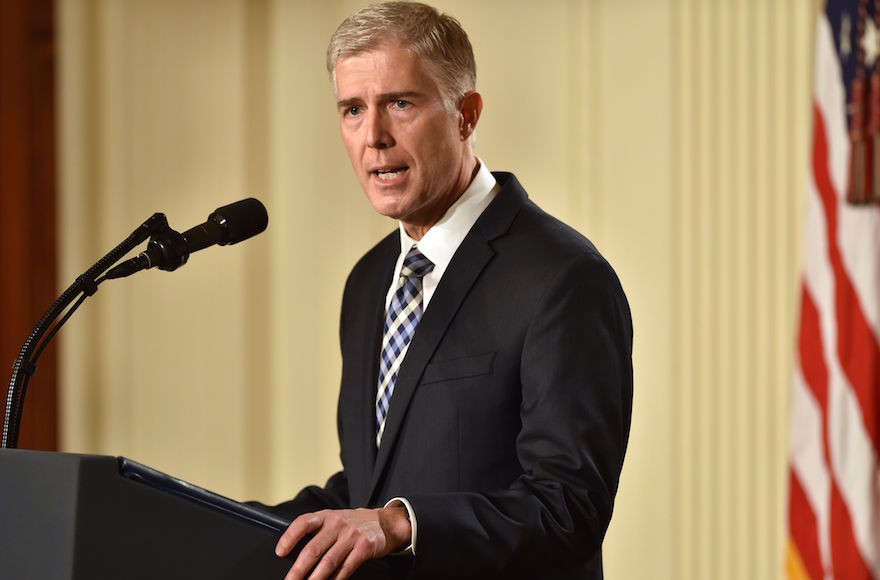
Judge Neil Gorsuch, President Donald Trump’s nominee for the Supreme Court, hails from Colorado, and if he is ultimately confirmed by the Senate, he could end up having a significant role in deciding whether marijuana will remain legal in his state and others.
Gorsuch currently serves on the 10th Circuit Court of Appeals in Denver, and he has ruled on at least three weed-related cases in recent years. Legal experts and marijuana industry attorneys say it’s hard to say how Gorsuch might rule when the high court takes its next pot case, and it might be impossible to know for sure unless he’s quizzed about it during his confirmation hearings. In the meantime, however, his track record offers some clues.
While Gorsuch is a conservative who falls somewhere between Antonin Scalia and Clarence Thomas on the spectrum of Supreme Court ideology, Alex Kreit, director of the Center for Law & Social Justice at the Thomas Jefferson School of Law, said there aren’t any red flags in his past that indicate he would be categorically opposed legal weed.
“There isn’t anything in his record that suggests he is a hardline anti-marijuana, pro-mandatory minimum zealot in the mold of Jeff Sessions — at least not that I’ve seen,” Kreit said. “And there are at least some cases that suggest he’s willing to rule in favor of individual rights and against the government in some criminal justice cases.”
Gorsuch’s most notable marijuana decision came in December 2015 on a case that dealt with a tax dispute between a Colorado dispensary and the IRS. The dispensary owners wanted to use the Fifth Amendment’s protection against self-incrimination to keep the nature of their business secret, which would have allowed them to significantly reduce their tax bill. Gorsuch joined the three-judge panel’s ruling against them, but his opinion included language that suggested he might be sympathetic to their situation.
He cited the “mixed messages the federal government is sending these days about the distribution of marijuana,” such as a 2013 memo from the Department of Justice that says federal authorities should not prosecute individuals who abide by state marijuana laws, even though weed remains illegal federally.
“So it is that today prosecutors will almost always overlook federal marijuana distribution crimes in Colorado but the tax man never will,” Gorsuch wrote, adding that, “the government simultaneously urged the court to take seriously its claim that the petitioners are violating federal criminal law and to discount the possibility that it would enforce federal criminal law.”
James Thorburn, the attorney for the dispensary owners, said that even though Gorsuch’s ruling was unfavorable to his clients, the judge was fair and thorough. He noted that Gorsuch has “an impeccable reputation,” and said he “asks the difficult questions, but he does it in such a way that it is very conducive to being able to argue a case effectively.”
“I think that he would be open to a favorable ruling to the marijuana industry,” Thorburn said. “That doesn’t say he would actually rule in favor of the industry, but I think the door is not closed.”
Gorsuch was also involved in a 2010 case where the 10th Circuit ruled that a couple accused of selling marijuana couldn’t use the Religious Freedom Restoration Act to defend themselves because their “marijuana dealings were motivated by commercial or secular motives rather than sincere religious conviction.”
In 2013, Gorsuch wrote the majority opinion in a case where the court ruled that it was “reasonable” for a police officer to use a taser on a suspect who fled in order to avoid being arrested for illegally growing marijuana. The suspect died from a heart condition, and his parents sued, claiming that the cop used excessive force. Gorsuch noted that “illegal processing and manufacturing of marijuana may not be inherently violent crimes but, outside the medical marijuana context, they were felonies under Colorado law at the time.”
Hilary Bricken, an attorney with the Seattle-based Canna Law Group, seconded Thornburn’s assessment, saying Gorsuch seems to be “a reasonable judge” who listens closely to the lawyers who appear in his courtroom. “I wouldn’t say he’s mainstream,” she said, “but he’s somebody you can argue with.”
Referring to the tax case, Bricken said Gorsuch appears to think that marijuana policies ought to be determined by the letter of the law, not the whims of the president or the attorney general.
“He doesn’t like federal overreach, especially executive overreach,” Bricken said. “Reading between the lines, he’s saying we’re not going to change this, it’s going to have to come through Congress.”
The big question, then, is whether Gorsuch would side with states or the federal government in a dispute over legal weed. The Supreme Court has already affirmed that Congress has the power to outlaw marijuana under the Constitution’s commerce clause, and that the Department of Justice can prosecute people who violate federal law, even when states have contradictory laws on the books. That means it will likely be up to Sessions, Trump’s pick for attorney general, to determine how the new administration handles legal weed.
Kreit said it seems unlikely that the Supreme Court will revisit the issue of “preemption” — whether federal drug laws trump state rules — anytime soon. But if that happens, it would likely determine whether state-level marijuana legalization goes up in smoke.
“Preemption is by far most important constitutional question related to marijuana legalization right now,” Kreit said. “If the Supreme Court were to rule the federal law trumps state legalization laws, that could conceivably wipe out every single state marijuana legalization law in the country — including medical marijuana — in a single opinion.”
Source
There are telling signs that Gorsuch may be sympathetic to state's rights when it comes to the issue of marijuana. If a case was ever brought before him that he would be fair about it. That is going from this article. If he is a fair jurist we can't ask for anything more except for a pro-marijuana partisan but we don't have that in this case. I say we back him. Contact your Senators and let them know you believe Gorsuch will follow the Constitution and to confirm him as Supreme Court Justice.
Monday, December 19, 2016
NORML issues open letter to incoming Vice President
From The National Organization for the Reform of Marijuana Laws (NORML):
Tomorrow, Michigan NORML will release an open letter to Vice President-Elect and presidential transition Chairman Mike Pence calling upon the incoming administration to declare their intentions on federal marijuana policy. Over 50 state and local NORML chapters representing tens-of-thousands of supporters have already co-signed.
The letter, combined with National NORML's petition to President-Elect Trump, is a powerful way in which we can influence the new administration as well as leaders in Congress in order to protect the rights of those in states that have instituted legalization, decriminalization, and medicinal marijuana.
Add your name to the thousands demanding cannabis clarity from the incoming administration.
With mixed signals coming from Donald Trump and his cabinet picks, the future of cannabis law reform has never been more uncertain. At times on the campaign trail, Trump has indicated support for states rights in regards to medicinal marijuana, yet his choice of Senator Jeff Sessions for Attorney General, the man who will be the nation's prosecutor-in-chief, sends a conflicting message.
As you may know, Sessions throughout his career has been militantly opposed to marijuana law reform and would, if empowered by President Trump and Congress, will have the ability to reverse all the hard fought protections that we have achieved to protect responsible marijuana users rights and freedoms.
Join the thousands who have added their name to find out if President Trump will reverse our progress.
Only when we stand together and speak with one unified voice, clearly demanding an end to our nation's outdated and unjust marijuana prohibition, will we win.
Thank you for all that you do,
NORML Team
P.S. Did you see our email about Local 420: The Marijuana Consumers Union? Sign up to be a monthly supporter of NORML and you will get awesome NORML gear, special updates from NORML staff, and invites to policy calls with leading marijuana experts and policy makers. Sign up today!
Tomorrow, Michigan NORML will release an open letter to Vice President-Elect and presidential transition Chairman Mike Pence calling upon the incoming administration to declare their intentions on federal marijuana policy. Over 50 state and local NORML chapters representing tens-of-thousands of supporters have already co-signed.
The letter, combined with National NORML's petition to President-Elect Trump, is a powerful way in which we can influence the new administration as well as leaders in Congress in order to protect the rights of those in states that have instituted legalization, decriminalization, and medicinal marijuana.
Add your name to the thousands demanding cannabis clarity from the incoming administration.
With mixed signals coming from Donald Trump and his cabinet picks, the future of cannabis law reform has never been more uncertain. At times on the campaign trail, Trump has indicated support for states rights in regards to medicinal marijuana, yet his choice of Senator Jeff Sessions for Attorney General, the man who will be the nation's prosecutor-in-chief, sends a conflicting message.
As you may know, Sessions throughout his career has been militantly opposed to marijuana law reform and would, if empowered by President Trump and Congress, will have the ability to reverse all the hard fought protections that we have achieved to protect responsible marijuana users rights and freedoms.
Join the thousands who have added their name to find out if President Trump will reverse our progress.
Only when we stand together and speak with one unified voice, clearly demanding an end to our nation's outdated and unjust marijuana prohibition, will we win.
Thank you for all that you do,
NORML Team
P.S. Did you see our email about Local 420: The Marijuana Consumers Union? Sign up to be a monthly supporter of NORML and you will get awesome NORML gear, special updates from NORML staff, and invites to policy calls with leading marijuana experts and policy makers. Sign up today!
Saturday, December 10, 2016
According to CNBC even Jeff Sessions can't stop the marijuana train
In November, the country elected a new president who promised to shake up Washington. At the same time, the cannabis industry took a giant leap forward with seven states voting yes to measures further legalizing marijuana. In total, California, Nevada, Massachusetts and Maine legalized recreational use, and Florida, North Dakota and Arkansas legalized medical use, bringing the total number of states with legal marijuana to 29.
The recent slate of successful marijuana-related measures at the state level could be viewed as a national referendum on cannabis. The "yes" votes cut across party lines and presidential candidates. Today, two-thirds of Americans live in states with legal access to cannabis.
California, the first to pass medical marijuana two decades ago, is arguably the most significant bellwether state in the evolution of cannabis. It is the country's most populous state, the sixth largest economy in the world and a cultural trendsetter. California's Proposition 64 legalizing adult use of marijuana passed with 57 percent of the votes.
As President-elect Donald Trump nominates members of his cabinet, some have conjectured about what U.S. Attorney General appointee Jeff Sessions, a Republican senator from Alabama, might mean for the future of the cannabis industry. The sober conclusion? Very little.
It is true that Mr. Sessions publicly has expressed contempt for marijuana users, but it is a giant leap to equate one's personal stance with a public policy position that will impact millions of lives. You can be a teetotaler, but still believe that the best way for government to control alcohol consumption is to regulate it, not ban it.
"The cannabis industry is on track to reach $23 billion by the end of the decade, it is already a major economic engine employing more than 100,000 and generating millions in tax revenue."
What we do know, from a policy perspective, is that Mr. Trump is on the record saying marijuana policy is something best left to the states, a position consistent with Republican Party's core doctrines.
U.S. Rep. Dana Rohrabacher (R-Calif.), a long-time supporter of marijuana policy reform in Capitol Hill, told reporters recently that he trusts that Mr. Trump's hands-off approach is likely to prevail.
In fact, Mr. Rohrabacher may hold more sway on federal policy than anyone in the executive branch when it comes to marijuana. The Rohrabacher-Farr Amendment, which he co-authored, prohibits the U.S. Department of Justice from prosecuting those who engage in state-sanctioned use, cultivation and dispensing of medical marijuana. It was first passed in 2014 with bipartisan support and again in 2015. It needs to be renewed each year, but it is currently the law.
Others have pointed out that the president cannot nullify state laws, and only Congress has the power to pass federal laws. And Congress' attitude toward marijuana is likely to reflect the U.S. electorate. The vast majority of Americans today favor legalizing marijuana, about 60 percent, the largest percentage ever, according to recent polls.
There are currently several bills working their way through Congress that could further ease Prohibition, including the Marijuana Business Access to Banking Act that would update federal banking rules to resolve conflicts between federal and state laws and allow banks and credit unions to provide services to legitimate marijuana businesses. U.S. Rep. Denny Heck (D-Wash.), a co-author of the banking bill, has said the results of this year's elections could give his bill a boost.
As more and more states legalize marijuana, the federal stance will be become untenable in the long run. It is fundamentally unfair that the same act of consuming marijuana can be perfectly legal in one state, and land you in prison in another. President Barack Obama made that very point during a recent interview with Bill Maher telling the television host that the time will come when the federal government must review its stance on cannabis.
With all due respect to President-elect Trump and Mr. Sessions, this debate is larger than one administration or one cabinet nomination. The cannabis industry is on track to reach $23 billion by the end of the decade, it is already a major economic engine employing more than 100,000 and generating millions in tax revenue.
The way for progress is not to turn back time, but to continue institutionalizing this space with professional standards and reasonable regulations that protect consumers and citizens.
Source
I added "According to CNBC" to the original title. The original title might just poke the bear too much and too hard. If that happens that bear will swipe his paw and cause marijuana dispensaries nationwide to be closed down. If you were not around in the 80's you are not familiar with the prohibitionist mindset being mainstream. Where the DEA had society's blessings and those that used marijuana were labeled as "drug addicts","stupid potheads" and "waste cases". The police could act on a tip by an informer (there have been cases where the informer was a fictional character) breakdown you front door. Making you lay down on your stomach as they ransack your house. They didn't find anything but they are going to take your home,cars and other property away anyway under the asset forfeiture laws. Your children will be taken away from you and given to strangers. Those were the days of the 80's. The same 80's Sessions wants to return this country to.
The recent slate of successful marijuana-related measures at the state level could be viewed as a national referendum on cannabis. The "yes" votes cut across party lines and presidential candidates. Today, two-thirds of Americans live in states with legal access to cannabis.
California, the first to pass medical marijuana two decades ago, is arguably the most significant bellwether state in the evolution of cannabis. It is the country's most populous state, the sixth largest economy in the world and a cultural trendsetter. California's Proposition 64 legalizing adult use of marijuana passed with 57 percent of the votes.
As President-elect Donald Trump nominates members of his cabinet, some have conjectured about what U.S. Attorney General appointee Jeff Sessions, a Republican senator from Alabama, might mean for the future of the cannabis industry. The sober conclusion? Very little.
It is true that Mr. Sessions publicly has expressed contempt for marijuana users, but it is a giant leap to equate one's personal stance with a public policy position that will impact millions of lives. You can be a teetotaler, but still believe that the best way for government to control alcohol consumption is to regulate it, not ban it.
"The cannabis industry is on track to reach $23 billion by the end of the decade, it is already a major economic engine employing more than 100,000 and generating millions in tax revenue."
What we do know, from a policy perspective, is that Mr. Trump is on the record saying marijuana policy is something best left to the states, a position consistent with Republican Party's core doctrines.
U.S. Rep. Dana Rohrabacher (R-Calif.), a long-time supporter of marijuana policy reform in Capitol Hill, told reporters recently that he trusts that Mr. Trump's hands-off approach is likely to prevail.
In fact, Mr. Rohrabacher may hold more sway on federal policy than anyone in the executive branch when it comes to marijuana. The Rohrabacher-Farr Amendment, which he co-authored, prohibits the U.S. Department of Justice from prosecuting those who engage in state-sanctioned use, cultivation and dispensing of medical marijuana. It was first passed in 2014 with bipartisan support and again in 2015. It needs to be renewed each year, but it is currently the law.
Others have pointed out that the president cannot nullify state laws, and only Congress has the power to pass federal laws. And Congress' attitude toward marijuana is likely to reflect the U.S. electorate. The vast majority of Americans today favor legalizing marijuana, about 60 percent, the largest percentage ever, according to recent polls.
There are currently several bills working their way through Congress that could further ease Prohibition, including the Marijuana Business Access to Banking Act that would update federal banking rules to resolve conflicts between federal and state laws and allow banks and credit unions to provide services to legitimate marijuana businesses. U.S. Rep. Denny Heck (D-Wash.), a co-author of the banking bill, has said the results of this year's elections could give his bill a boost.
As more and more states legalize marijuana, the federal stance will be become untenable in the long run. It is fundamentally unfair that the same act of consuming marijuana can be perfectly legal in one state, and land you in prison in another. President Barack Obama made that very point during a recent interview with Bill Maher telling the television host that the time will come when the federal government must review its stance on cannabis.
With all due respect to President-elect Trump and Mr. Sessions, this debate is larger than one administration or one cabinet nomination. The cannabis industry is on track to reach $23 billion by the end of the decade, it is already a major economic engine employing more than 100,000 and generating millions in tax revenue.
The way for progress is not to turn back time, but to continue institutionalizing this space with professional standards and reasonable regulations that protect consumers and citizens.
Source
I added "According to CNBC" to the original title. The original title might just poke the bear too much and too hard. If that happens that bear will swipe his paw and cause marijuana dispensaries nationwide to be closed down. If you were not around in the 80's you are not familiar with the prohibitionist mindset being mainstream. Where the DEA had society's blessings and those that used marijuana were labeled as "drug addicts","stupid potheads" and "waste cases". The police could act on a tip by an informer (there have been cases where the informer was a fictional character) breakdown you front door. Making you lay down on your stomach as they ransack your house. They didn't find anything but they are going to take your home,cars and other property away anyway under the asset forfeiture laws. Your children will be taken away from you and given to strangers. Those were the days of the 80's. The same 80's Sessions wants to return this country to.
Wednesday, December 7, 2016
Where does the Donald stand on marijuana?
Where does President-elect Donald Trump stand on marijuana-medical and recreational,state's rights and the nomination of Jeff Sessions,staunch prohibitionist extraordinaire,for Attorney General?
NORML is asking that same question. That is why they are sending Trump a letter asking him to clarify his position. NORML would love it if you added your signature to the letter.
Trump has stated that he will respect the laws the states have enacted concerning marijuana. Yet his nomination of Jeff Sessions contradicts that position. I have written on Sessions and posted news stories about him when it concerns marijuana legalization. Sessions longs for the old days of police brutality,broken in doors,destroyed families and properties. Not to mention legally stolen items that have nothing to do with the crime but good luck proving your innocence. Wait,I thought it was innocent until proven guilty. Not in military court martials and asset forfeiture hearings.
NORML is asking that same question. That is why they are sending Trump a letter asking him to clarify his position. NORML would love it if you added your signature to the letter.
Trump has stated that he will respect the laws the states have enacted concerning marijuana. Yet his nomination of Jeff Sessions contradicts that position. I have written on Sessions and posted news stories about him when it concerns marijuana legalization. Sessions longs for the old days of police brutality,broken in doors,destroyed families and properties. Not to mention legally stolen items that have nothing to do with the crime but good luck proving your innocence. Wait,I thought it was innocent until proven guilty. Not in military court martials and asset forfeiture hearings.
Tuesday, December 6, 2016
Americans For Safe Access sue the DEA
From American For Safe Access:
Today, Americans for Safe Access (ASA) took a major step to stop the DEA’s misinformation campaign on cannabis once and for all. And as an ASA member, you helped make it happen!
ASA filed a new petition under the Information Quality Act (IQA) on behalf of our members that could force the Drug Enforcement Administration (DEA) to update its outdated and unscientific information about medical cannabis. If this new effort is successful, it will be a watershed moment in the effort to end the conflict between federal and state law. This important step will also mean politicians will no longer be able to use this misinformation to fight against medical cannabis.
ASA has worked with the prestigious international law firm Orrick, Herrington & Sutcliffe to file the petition on behalf of our 100,000 members nationwide. U.S. Department of Justice guidelines require a response to IQA petitions within 60 days of filing. That means that the Obama Administration can still act on our members’ IQA petition and instruct the DEA to grant the request before Inauguration Day on January 20th.
The IQA requires federal agencies to employ reliable and sound science when making regulations and disseminating information. It also provides a mechanism for people and companies to challenge government information they believe to be inaccurate. Business, consumer, environmental and conservation groups have all used the IQA to pursue changes in government policies. Now is our chance to use this tool to make a real difference in federal policy.
Forcing a change in federal policy towards medical cannabis before Obama leaves could make all the difference when it comes to rescheduling and changing federal law during the new Administration.
ASA cites 25 violations under the IQA, alleging that the DEA website currently contains inaccurate statements that do not meet informational standards required by the law. Making matters worse, the DEA continues to distribute statements about the efficacy of medical cannabis and its risks, which have been refuted by the DEA itself in the recent “Denial of Petition to Initiate Proceedings to Reschedule Marijuana,” issued August 12, 2016. If this petition is successful, it means that the DEA will no longer be able to use misinformation about cannabis on issues such as the gateway drug hypothesis, irreversible cognitive decline in adults, and how cannabis can be linked to psychosis or lung cancer to deny patients access to medical cannabis.
If you want to be a part of history, it is not too late to join ASA and be a part of this amazing moment. If you are already a member, you can also help by making a generous one-time donation or affordable monthly contribution to help us fight for your IQA petition – all the way to the Supreme Court, if necessary. Please know, we cannot do this without you!
Now is the time to act! We need all ASA members and allies to join together and take the offensive in the effort to finally change federal medical cannabis policies. Do not miss out on this once in a lifetime opportunity to make a difference in medical cannabis policy!
We need all of our voices to be heard to get this petition approved right now or in the federal courts next year. Please contribute today to support this effort.
Thank you in advance for being a part of the IQA campaign. Together, we are getting closer and closer to our goal – safe and legal access to medical cannabis for everyone who needs it.
Regards,
Steph Sherer
Executive Director, Americans For Safe Access
For more information on the IQA petition please refer to this webpage.
P.S. – You can make a tax-deductible contribution to support the educational and legal work of Americans for Safe Access Foundation, including the IQA petition campaign, online or by mailing a check or money order to Americans for Safe Access Foundation, 1624 U Street, NW, Suite 200, Washington, DC 20009.
Today, Americans for Safe Access (ASA) took a major step to stop the DEA’s misinformation campaign on cannabis once and for all. And as an ASA member, you helped make it happen!
ASA filed a new petition under the Information Quality Act (IQA) on behalf of our members that could force the Drug Enforcement Administration (DEA) to update its outdated and unscientific information about medical cannabis. If this new effort is successful, it will be a watershed moment in the effort to end the conflict between federal and state law. This important step will also mean politicians will no longer be able to use this misinformation to fight against medical cannabis.
ASA has worked with the prestigious international law firm Orrick, Herrington & Sutcliffe to file the petition on behalf of our 100,000 members nationwide. U.S. Department of Justice guidelines require a response to IQA petitions within 60 days of filing. That means that the Obama Administration can still act on our members’ IQA petition and instruct the DEA to grant the request before Inauguration Day on January 20th.
The IQA requires federal agencies to employ reliable and sound science when making regulations and disseminating information. It also provides a mechanism for people and companies to challenge government information they believe to be inaccurate. Business, consumer, environmental and conservation groups have all used the IQA to pursue changes in government policies. Now is our chance to use this tool to make a real difference in federal policy.
Forcing a change in federal policy towards medical cannabis before Obama leaves could make all the difference when it comes to rescheduling and changing federal law during the new Administration.
ASA cites 25 violations under the IQA, alleging that the DEA website currently contains inaccurate statements that do not meet informational standards required by the law. Making matters worse, the DEA continues to distribute statements about the efficacy of medical cannabis and its risks, which have been refuted by the DEA itself in the recent “Denial of Petition to Initiate Proceedings to Reschedule Marijuana,” issued August 12, 2016. If this petition is successful, it means that the DEA will no longer be able to use misinformation about cannabis on issues such as the gateway drug hypothesis, irreversible cognitive decline in adults, and how cannabis can be linked to psychosis or lung cancer to deny patients access to medical cannabis.
If you want to be a part of history, it is not too late to join ASA and be a part of this amazing moment. If you are already a member, you can also help by making a generous one-time donation or affordable monthly contribution to help us fight for your IQA petition – all the way to the Supreme Court, if necessary. Please know, we cannot do this without you!
Now is the time to act! We need all ASA members and allies to join together and take the offensive in the effort to finally change federal medical cannabis policies. Do not miss out on this once in a lifetime opportunity to make a difference in medical cannabis policy!
We need all of our voices to be heard to get this petition approved right now or in the federal courts next year. Please contribute today to support this effort.
Thank you in advance for being a part of the IQA campaign. Together, we are getting closer and closer to our goal – safe and legal access to medical cannabis for everyone who needs it.
Regards,
Steph Sherer
Executive Director, Americans For Safe Access
For more information on the IQA petition please refer to this webpage.
P.S. – You can make a tax-deductible contribution to support the educational and legal work of Americans for Safe Access Foundation, including the IQA petition campaign, online or by mailing a check or money order to Americans for Safe Access Foundation, 1624 U Street, NW, Suite 200, Washington, DC 20009.
Tuesday, November 22, 2016
Sorry Rush
On today's Rush Limbaugh show Rush brought up a few people considered for Trump's cabinet that the leftists objected to. Amongst them was Senator Jeff Sessions. Rush pointed out that their fears about these cabinet members was unfounded. Usually the left's fears are unfounded. This time however the left is correct on this one. Recreational and medical marijuana have been approved by several states. If Jeff Sessions becomes Attorney General those rights and laws that have been severely fought for may be taken away from us by systematic raids by the DEA with the blessing of Sessions himself. We can't take that risk. We have to oppose the nomination of Jeff Sessions for Attorney General. The best way we can do that is to contact our Congressional Representative along with our Senators. Let's tell Donald Trump himself here and here.
Subscribe to:
Posts (Atom)